Edge AI Deployment Strategies 2026: Bringing Frontier Models to Issues
A technical guide to deploying LLMs on smartphones and IoT devices. We cover model distillation, 4-bit quantization, and the Apple Neural Engine vs Snapdragon NPU landscape.

Summary: The cloud is too slow and too expensive for the next generation of AI apps. In 2026, the battleground is the Edge. By combining aggressive quantization (4-bit) with specialized NPUs (Neural Processing Units), developers are running 7B parameter models on phones with <10ms latency.
1) Executive Summary
For the first three years of the Generative AI boom, “Intelligence” equaled “Cloud API.” That model is breaking under the weight of latency requirements and privacy laws. As of 2026, 55% of AI inference happens on the edge[1]. This shift is enabled by a hardware-software confluence: chips like the Snapdragon X Elite and Apple M5 have NPUs capable of 45+ TOPS (Trillions of Operations Per Second), and software stacks like ONNX Runtime and ExecuTorch have largely solved the fragmentation problem. This guide details the architecture for deploying production LLMs to the edge without destroying battery life.
2) Why Edge? The “Three P’s”
- Privacy: Data never leaves the device. Essential for healthcare apps and predictive keyboards.
- Performance: Zero network latency. Processing a voice command happens instantly, even in an airplane mode.
- Price: Cloud inference costs money per token. User device inference is free (for the developer).
3) The Architecture of Shrinking
You cannot run a 70B fp16 model (140GB) on an iPhone. You must compress it.
Quantization: The 4-bit Standard
In 2026, 4-bit quantization is the industry standard.
- FP16 (16-bit): “Perfect” accuracy, heavy memory usage.
- INT8 (8-bit): The standard for years. ~2x compression.
- INT4 (4-bit): The modern standard. ~4x compression with <1% accuracy loss (using techniques like GPTQ or AWQ).
| Precision | Model Size (7B Param) | RAM Required | Perplexity (Accuracy Error) |
|---|---|---|---|
| FP16 | 14 GB | 16 GB | Baseline |
| INT8 | 7 GB | 8 GB | +0.01% |
| INT4 | 3.5 GB | 4 GB | +0.5% |
| INT2 (Experimental) | 1.8 GB | 2 GB | +4.5% (Noticeable degradation) |
4) Hardware Accelerators: The NPU War
General purpose CPUs are too slow; GPUs are power hungry. The NPU is the specialized silicon for matrix math.
- Apple Neural Engine (ANE): Optimized for CoreML. Extremely power efficient. Best for “background” AI (like photo sorting).
- Qualcomm Hexagon (Snapdragon): The beast of Android. Optimized for TFLite and ONNX. Can sustain high throughput for gaming/chat.
- Google Edge TPU: Built for “streaming” tensor operations (Pixel phones).
5) Implementation Guide: PyTorch to Mobile
The path from “Training” to “Pocket” involves a compilation chain.
Step 1: Export to ONNX
We use the Open Neural Network Exchange (ONNX) format as the intermediate representation.
# Exporting a compressed Llama-3-8b model to ONNX
import torch
from onnxruntime.quantization import quantize_dynamic, QuantType

# 1. Export standard model
torch.onnx.export(model, dummy_input, "llama3.onnx",
                  input_names=['input_ids'],
                  output_names=['logits'])

# 2. Quantize to INT8 (for broad compatibility)
quantize_dynamic("llama3.onnx", "llama3.int8.onnx",
                 weight_type=QuantType.QUInt8)
Step 2: Runtime Selection
- iOS: Convert ONNX to CoreML (
coremltools). - Android: Use ONNX Runtime directly or convert to TFLite.
- Web/Browser: Use WebLLM (WebGPU based) to run the model in Chrome without an install.
6) Battery Impact Analysis
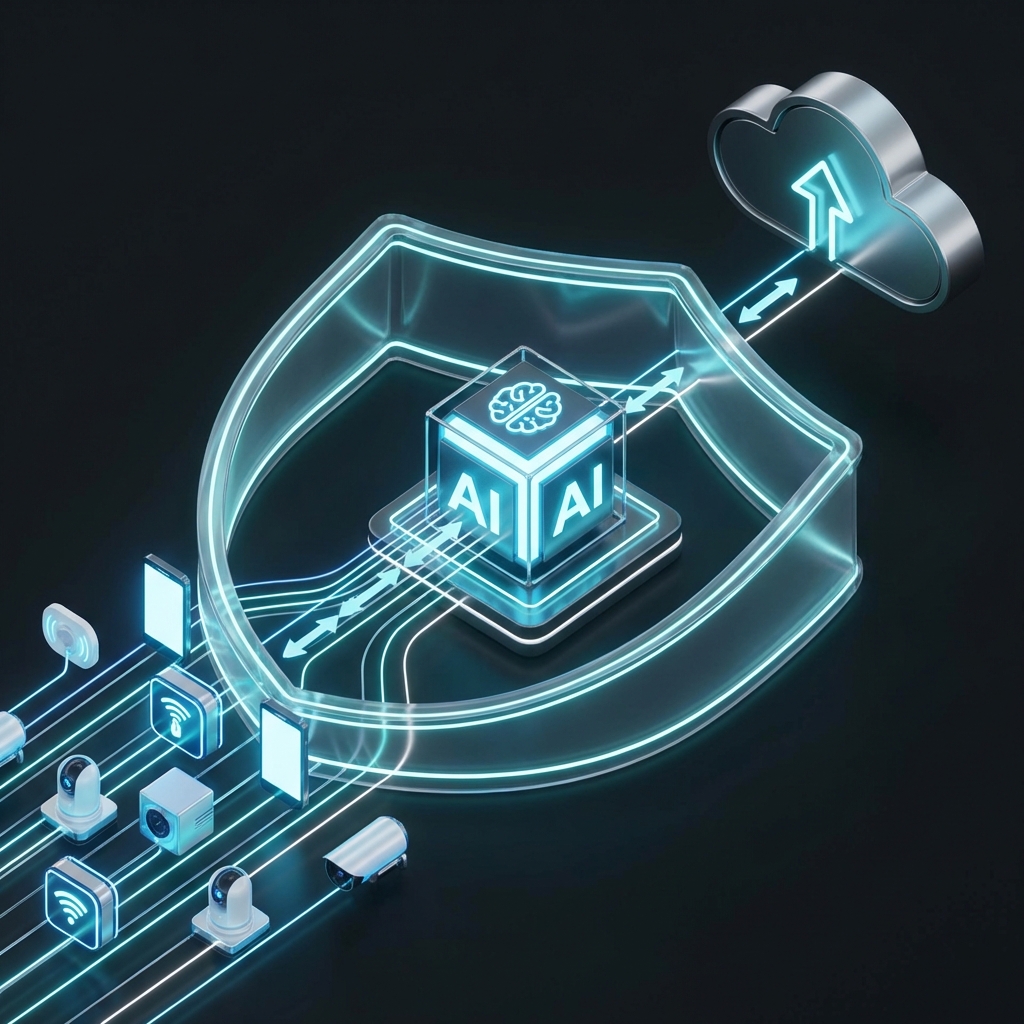
Running a 7B model at 20 tokens/sec burns power.
- CPU Inference: ~5W power draw. Drains an iPhone battery in <2 hours. Heat throttling kicks in after 5 minutes.
- NPU Inference: ~1.5W power draw. Sustainable for long sessions.
- Best Practice: “Burst Inference.” Load the model, generate the answer quickly, and unload it immediately to free up RAM and power.
7) Privacy-First Architectures
The emerging pattern is “Personal RAG.” The vector database is not on Pinecone; it’s on the phone (using SQLite-VSS or Chroma-Embedded).
- Workflow: The app indexes your SMS, Emails, and Notes locally.
- Query: “When is my flight?”
- Retrieval: Finds the email locally.
- Generation: The Mobile LLM summarizes it.
- Result: Highly personalized answer, zero data sent to the cloud.
8) Key Takeaways
- Don’t Ship FP32: It’s malpractice in 2026. Use INT4.
- Target the NPU: If your app runs on CPU, it will be uninstalled for battery drain.
- Hybrid Fallback: If the query is too complex (“Write a novel”), detect it and hand off to the Cloud. If it’s simple (“Set a timer”), handle it on Edge.
[1] Microsoft, “What’s Next in AI Edge Computing,” 2026.
[2] Apple, “Machine Learning Research: On-Device Transformers,” Dec 2025.
[3] Qualcomm, “Snapdragon X Elite NPU Benchmarks,” Jan 2026.
[4] IBM, “AI Tech Trends: The Edge Shift,” 2026.
Related Articles
Multi-Agent Orchestration Patterns: Architecting the "Swarm" Enterprise
Architecture guide for coordinating autonomous agent swarms. We cover the Master-Agent delegation pattern, the Model Context Protocol (MCP), and how to debug non-deterministic distributed systems.

AI Cybersecurity Evolution 2026: The Era of Autonomous Defense
Analyzing the shift from reactive security to autonomous threat detection. We examine the 82:1 AI agent-to-human ratio, the rise of "Deepfake Identity Attacks," and the zero-trust architectures required to survive.

The Open-Source LLM Ecosystem in 2026: Why 93% of Enterprise Budgets Have Shifted
Analyzing the economic shift from proprietary APIs to fine-tuned open models like Llama 4 and DeepSeek. We examine TCO, governance, and the "Small Model" revolution.