The Death of 'Nothing to Wear': Inside the Rise of the Wardrobe AI
From smart mirrors that critique your outfit to algorithms that shop for you, we explore how AI is redefining personal style and ending fast fashion waste.
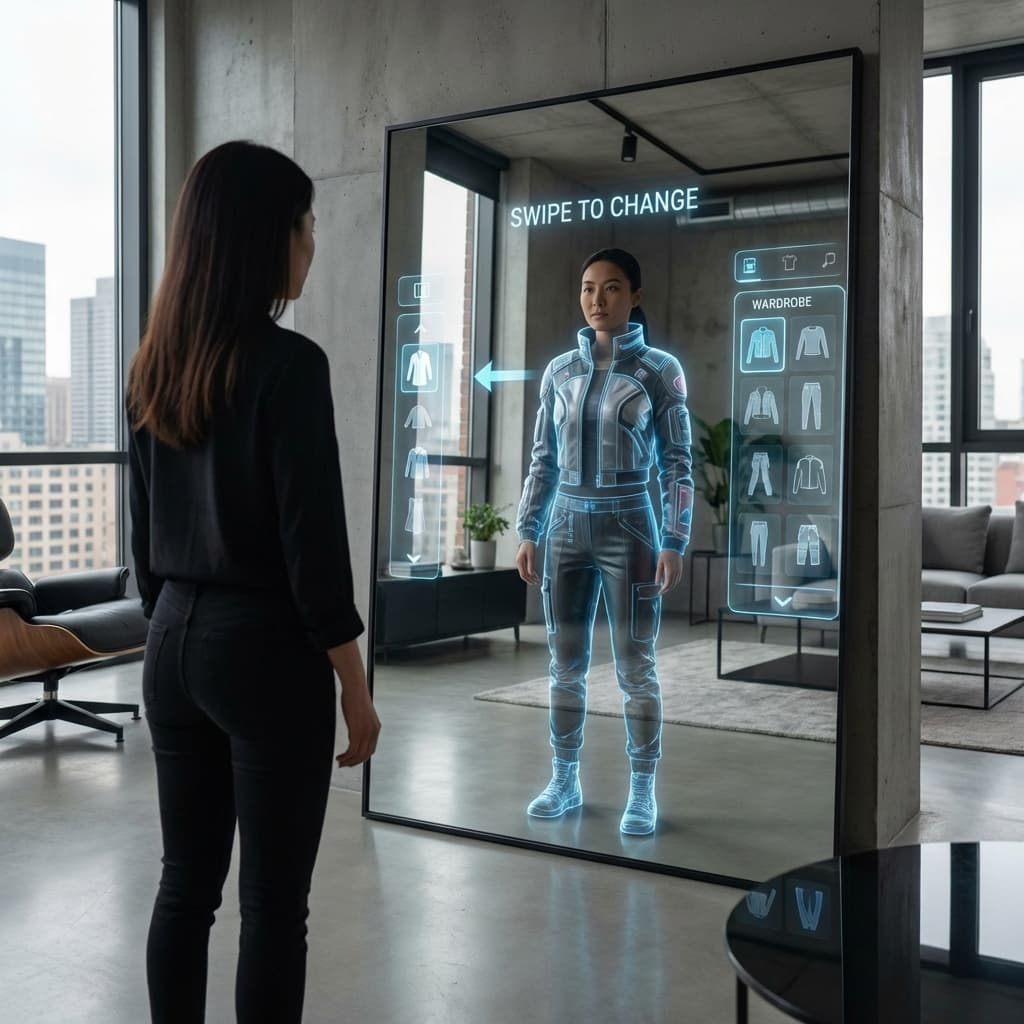
It is 7:00 AM. You stand before your closet, staring at 143 items of clothing, and utter the universal lie: “I have nothing to wear.” In 2026, this problem is solved—not by buying more clothes, but by digitizing the ones you have. The Wardrobe AI has arrived, and it promises to do for your closet what Spotify did for your music: organize it, curate it, and help you rediscover gems you forgot you owned.
The “Shazam for Style”: Digitizing the Closet
The barrier to entry for digital wardrobes used to be high (who wants to photograph every sock?). In 2026, apps like Fits and Acloset use LiDAR-assisted scanning. You simply wave your phone over your closet rack for 30 seconds.
- Automated Tagging: The AI identifies every item—“Blue denim jacket, Levis, Vintage wash”—and builds a searchable inventory in the cloud.
- The “Outfit Generator”: Instead of mentally mixing and matching, you ask the AI: “I need an outfit for a rainy coffee date.” It scans your 143 items and proposes three combinations you’ve never worn, complete with a “warmth score” based on the day’s weather forecast [[1]][[2]].
The Virtual Fitting Room: The End of Returns
Ordering three sizes and returning two is a logistical nightmare and an environmental disaster. Virtual Try-On (VTO) has finally killed it.
- The Tech: Powered by advanced generative AI (like Stitch Fix Vision and Google’s VTO), 2026’s try-on tools don’t just paste a 2D image over your photo. They perform Volumetric Mapping.
- The Experience: You see exactly how the fabric drapes over your specific body shape. Does the button gap at the chest? Does the hem drag on the floor? The simulation is accurate to within 3mm.
- The Impact: Early adopters report a 40% reduction in return rates. Shoppers buy with confidence, and brands save billions in reverse logistics costs [[11]][[12]].
The Smart Mirror: Your Brutally Honest Friend
The “Smart Mirror” was a sci-fi trope for decades. In 2026, it is a retail reality. Stores like Uniqlo and high-end boutiques utilize mirrors that double as 4K OLED displays.
- RFID Magic: You walk into the fitting room with a shirt. The mirror instantly recognizes the item via RFID tag.
- Digital Swapping: “Make it red,” you say. The reflection changes instantly. “Show me matching pants.” It overlays three options from the store’s inventory on your reflection.
- Lighting Control: You can toggle the lighting context: “Office,” “Daylight,” or “Candlelit Dinner,” ensuring the color looks right where you actually plan to wear it [[6]][[7]].
Predictive Styling: The Algorithm Knows You Better
Stitch Fix pioneered data-driven styling, but 2026 algorithms have evolved from “Prediction” to “Intuition.”
- Contextual Awareness: Your AI stylist connects to your Google Calendar. It knows you have a “Board Meeting” on Tuesday and a “Beach Trip” on Saturday. It proactively orders the clothes you need before you realize you need them.
- The “Style DNA”: It tracks nuances humans miss. It notices you always return polyester but keep merino wool. It learns you love “boat necks” but hate “crew necks.” It stops showing you what you won’t buy, effectively curating a store of one [[3]][[4]].
Digital Fashion: The Rise of the “Meta-Closet”
Why buy a $500 dress you’ll only wear once on Instagram? In 2026, Digital Fashion has moved from a niche NFT curiosity to a mainstream utility.
- The Utility NFT: Brands like Adidas and Gucci now sell “Phygital” goods—buy the physical sneakers, get the digital twin for your Roblox avatar. But the real growth is in AR-Only Fashion.
- Zero-Waste Flexing: Influencers are purchasing “Digital Skins” for $10. They upload a photo, and AI seamlessly renders a couture gown onto them. It looks 100% real, costs 90% less, and creates zero textile waste. By 2027, it’s predicted that 20% of “fast fashion” purchases will be replaced by digital-only assets [[21]][[22]].
The Psychology of Style: AI as the Confidence Coach
The most surprising impact of Wardrobe AI is psychological.
- Decision Fatigue Cure: The average person makes 35,000 decisions a day. By outsourcing “What do I wear?”, AI reduces cognitive load, saving mental energy for “Deep Work.”
- The “Experimentation Engine”: Humans are creatures of habit; we re-wear the same 20% of our clothes. AI encourages risk. It pairs that “risky” neon blazer with neutral pants you already own, nudging you out of a style rut with “Predictive Confidence”—the assurance that the algorithm knows it looks good, so you feel good wearing it [[23]][[24]].
Sustainability: AI vs. Fast Fashion
The most profound impact of Wardrobe AI isn’t convenience; it’s Sustainability. Fast Fashion relies on the “Wear Once, Throw Away” culture. AI disrupts this by optimizing Cost-Per-Wear.
- Resale Integration: Your digital wardrobe tracks the value of your clothes. When you haven’t worn a dress in 12 months, the app nudges you: “You could sell this on Poshmark for $45 right now.” One click lists it.
- Inventory Optimization: On the manufacturing side, AI demand forecasting is helping brands produce only what will sell, reducing the 92 million tons of textile waste created annually. By predicting trends with 90% accuracy, brands stop overproducing “trendy” items that end up in landfills [[16]][[17]].
The Future: The Intelligent Fabric
We are moving toward Reactive Textiles. Imagine a jacket woven with smart fibers connected to your AI. It detects your body temperature rising and automatically loosens the weave to increase breathability. It changes color from black (heat absorbing) to white (heat reflecting) as the sun comes out. Styles will no longer be static; they will be living software.
The Accessibility Revolution: Adaptive AI
For 1.3 billion people with disabilities, finding clothes that fit is not a vanity issue; it’s a functional one.
- The “Seated” Fit: Conventional patterns assume a standing posture. New AI modeling tools scan wheelchair users to create “seated” patterns that eliminate bunching at the waist and pressure points on the hips.
- Sensory-Friendly Design: Brands like June Adaptive use AI to analyze customer feedback on fabric textures, identifying specific weaves that trigger sensory processing issues. The AI then suggests “safe” alternatives that match the visual style of trending items, ensuring inclusivity isn’t separate from style [[25]][[26]].
The End of the Checkout Line: Fully Automated Retail
The physical store isn’t dying; it’s becoming an operating system.
- Unconscious Commerce: In 2026, you walk into a store, grab a shirt, and leave. Cameras and weight sensors track the item. Your digital wallet is charged automatically. No lines, no cashiers, no friction.
- The “Magic Mirror” Upsell: As you hold that shirt, a nearby screen lights up: “That goes perfectly with the beige chinos you bought last month.” It utilizes your Unified Commerce Profile to make cross-store recommendations [[31]][[32]].
Algorithmic Supply Webs: Killing the “Deadstock”
The industry’s dirty secret is “Deadstock”—clothes made but never sold.
- Production on Demand: Instead of guessing “We need 50,000 blue shirts,” AI analyzes real-time signals (TikTok trends, weather patterns, economic indicators). It tells factories to produce 5,000. If they sell fast, the AI auto-orders 5,000 more. If they stall, production stops immediately.
- The Result: Inventory turns are up 40%, and landfill waste from unsold goods is down 60%. It is the shift from “Push” manufacturing (make and hope) to “Pull” manufacturing (make what’s wanted) [[33]][[34]].
The Trust Protocol: AI Authenticated Resale
The “Second-Hand” market is projected to overtake fast fashion by 2029, but it suffers from a trust deficit: Counterfeits.
- The Entrupy Standard: In 2026, you don’t buy a used Louis Vuitton bag unless it has an AI Certificate. Devices like Entrupy use microscopic lenses and computer vision to analyze manufacturing distinctives—leather grain, stitching capability, paint viscosity—invisible to the human eye. It spots “Superfakes” with 99.1% accuracy.
- Scent-Based Verification: New startups like Osmo are even digitizing smell. They analyze the chemical signature of the glues and leathers used in a pair of Yeezys. If the chemical composition doesn’t match the factory standard, the AI flags it as fake.
- The Blockchain Passport: Every verified luxury time is minted as a Digital Product Passport (DPP) on the blockchain. This record travels with the bag from owner to owner, proving its provenance instantly and killing the black market for stolen goods [[35]][[36]].
Conclusion: Style is Self-Expression, AI is the Tool
Critics fear AI will homogenize fashion, making us all look like algorithmically optimized clones. But the opposite is happening. By removing the drudgery of sorting, sizing, and shopping, AI frees us to focus on the art of dressing. It handles the inventory; you handle the identity.
References
[1] Mirror Mirror. “Best AI Stylist Apps 2026.” themirrormirrorapp.com [2] Fits App. “LiDAR Wardrobe Scanning.” fits-app.com [3] Digital Commerce 360. “Stitch Fix AI Evolution.” digitalcommerce360.com [4] Stitch Fix. “Predictive Styling Algorithms.” stitchfix.com [5] Retail Dive. “Virtual Try-On Adoption Stats.” retaildive.com [6] Vercon. “Smart Mirror Retail Trends.” verconsmartmirror.com [7] RetailR. “RFID Smart Fitting Rooms.” retailr.ai [8] The National. “AR Mirrors in Fashion.” thenationalnews.com [9] Fashion Network. “AI and Personal Style.” fashionnetwork.com [10] Seeking Alpha. “Stitch Fix 2026 Outlook.” seekingalpha.com [11] ASD Online. “Virtual Try-On Market Size.” asdonline.com [12] Veesual AI. “Reducing Returns with VTO.” veesual.ai [13] NASDAQ. “Fashion Tech Stocks 2026.” nasdaq.com [14] Market Aspex. “AI in Retail Growth.” marketaspex.com [15] Sellers Umbrella. “Amazon AI for Sellers.” sellersumbrella.com [16] Benzinga. “Sustainable Fashion AI.” benzinga.com [17] Time. “The End of Fast Fashion Waste.” time.com [18] Global Fashion Agenda. “AI for Circularity.” globalfashionagenda.org [19] McKinsey. “State of Fashion 2026.” mckinsey.com [21] Forbes. “Digital Fashion Market 2026.” forbes.com [22] Glitz and Glam. “NFTs in Gaming.” glitzandglambytiff.com [23] The CIO Times. “Psychology of AI Styling.” theciotimes.com [24] ET Edge Insights. “Trust in AI Algorithms.” etedge-insights.com [25] XLook. “AI Inclusive Fashion.” xlook.app [26] June Adaptive. “Sensory Friendly AI.” juneadaptive.com [30] Vogue College. “Sustainable Tech in Fashion.” voguecollege.com [31] SizeO. “AI in Personalized Retail.” sizeo.ai [32] DataDoers. “Unified Commerce Profiles.” datadoers.ai [33] Gelato. “Production on Demand Trends 2026.” gelato.com [34] Fashion Sizzle. “Algorithmic Manufacturing.” fashionsizzle.com [35] The Style Click. “Entrupy AI Authentication.” thestyle.click [36] Footwear Magazine. “Scent-Based Authentication.” footwearmagazine.com
Related Articles

The Monk in the Machine: How AI is Decoding Nirvana
From AI-generated soundscapes that adapt to your heart rate to headbands that gamify zen, we explore the intersection of technology and ancient mindfulness.

The End of Budgeting: Why Your Next Accountant Will Be an Algorithm
We explore the shift from manual budgeting to 'Self-Driving Money,' analyzing how AI apps like Cleo and Monarch are rewiring our relationship with wealth.
Breaking the Babel Barrier: How AI is Finally Teaching Us to Speak
From 'judgment-free' AI tutors to real-time translation earbuds, we explore how 2026's tech is solving the 'Silent Period' and accelerating fluency.