DeepSeek R1 and the Rise of Reasoning LLMs: Solving the "Verification Gap"
Analyzing DeepSeek R1-0528’s 87.5% AIME score and the sparse attention architecture behind it. We compare it to GPT-4o and Claude 3.5 Sonnet, highlighting when enterprise apps need reasoning vs. just generation.

Summary: Standard LLMs predict the next word. Reasoning LLMs predict the next thought. DeepSeek R1’s recent benchmark dominance proves that open models using sparse attention and chain-of-thought (CoT) fine-tuning can outperform closed, dense models on complex logic tasks.
1) Executive Summary
In January 2026, the open-weights model DeepSeek R1-0528 shocked the AI community by scoring 87.5% on the AIME 2025 benchmark[1], surpassing proprietary models like GPT-4o and Gemini Ultra. This performance delta signals the maturity of Reasoning LLMs—models explicitly trained to generate hidden “chains of thought” before emitting a final answer. While standard models excel at fluency, Reasoning models excel at verifiability. This analysis explores the Multi-Head Latent Attention (MLA) architecture that makes this efficiency possible and outlines the specific enterprise use cases (legal analysis, complex coding) where reasoning models justify their higher inference cost.
2) The “Reasoning” Difference
Why did GPT-4 struggle with math word problems that DeepSeek R1 solves easily?
- System 1 vs System 2: Standard LLMs operate like System 1 thinking (fast, intuitive, prone to bias). DeepSeek R1 implements System 2 thinking (slow, deliberative).
- The Chain of Thought: When asked “A train leaves Chicago…”, standard model jumps to the answer. DeepSeek R1 produces a verbalized thinking track: “First, I need to calculate the relative speed. Then, I define $t$ as time…”
The Innovation: DeepSeek didn’t just prompt a model to “think step by step”; they used Reinforcement Learning on Reasoning (RLR) to reward the validity of the reasoning steps, not just the final token.
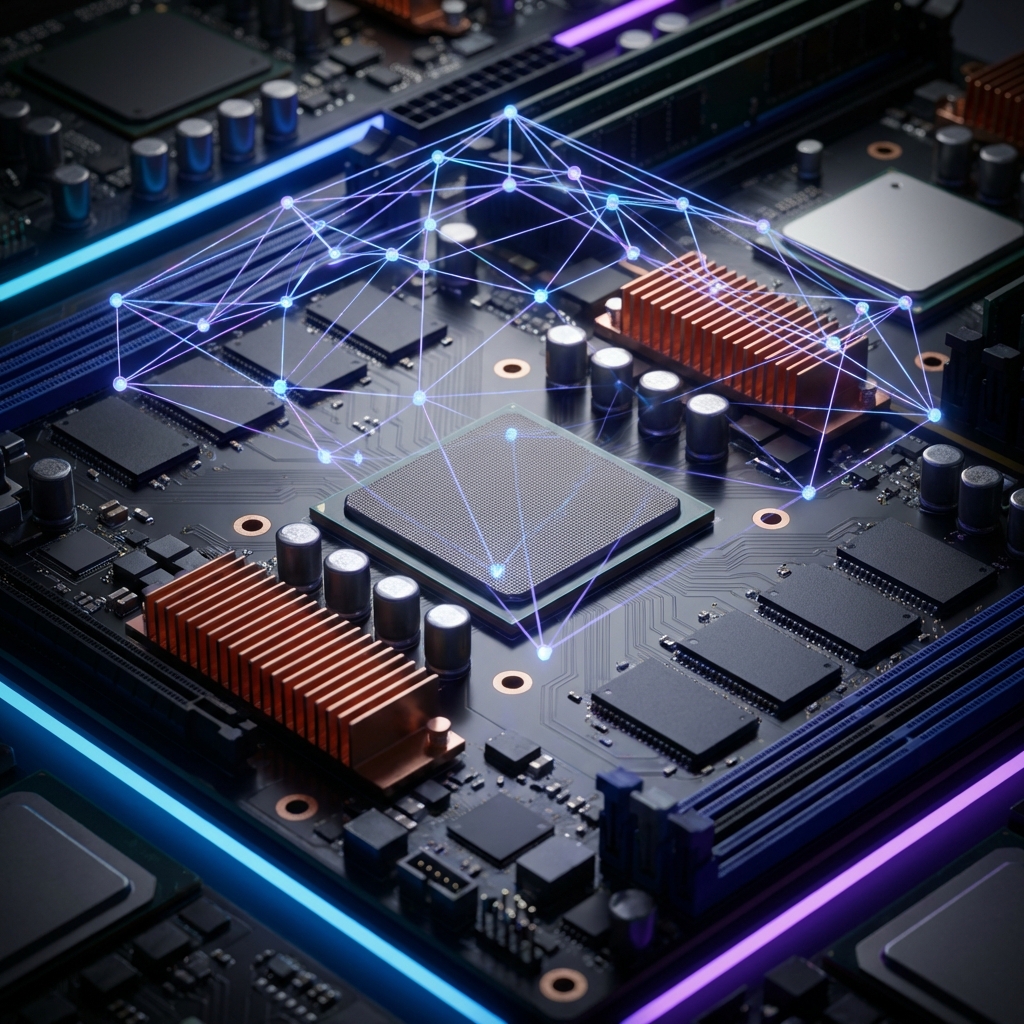
3) Technical Architecture: Sparse Attention & MLA
DeepSeek R1 achieves its performance with a fraction of the memory footprint of Llama 4-70B, thanks to two architectural shifts.
Multi-Head Latent Attention (MLA)
Traditional KV (Key-Value) caching grows linearly with context length, eating up VRAM. MLA compresses the KV cache into a low-rank latent vector.
- Impact: Reduces VRAM usage during generation by 93%.
- Result: You can run a 128k context window on a single A100 GPU, whereas Llama-3 needs 4-8 GPUs.
Mixture-of-Experts (MoE) with Fine-Grained Routing
DeepSeek is a MoE model, but unlike Mixtral (which usually selects 2 experts), DeepSeek uses Fine-Grained Expert Segmentation. It routes tokens to 64 small experts, ensuring that a “Coding” token hits a specific “Python Syntax” expert, not a generic “Tech” expert.
4) Benchmark Showdown
How does it stack up against the closed-source giants in 2026?
| Benchmark | DeepSeek R1 (Open) | GPT-4o (Closed) | Claude 3.5 Sonnet |
|---|---|---|---|
| AIME 2025 (Math) | 87.5% | 83.1% | 84.8% |
| HumanEval (Coding) | 92.4% | 90.2% | 93.1% |
| GPQA Diamond (Science) | 68.9% | 70.2% | 67.5% |
| Cost (per 1M tokens) | $0.14 (Self-hosted) | $5.00 | $3.00 |
Analysis: DeepSeek wins on pure logic (Math). Claude remains the king of coding style and safety. GPT-4o wins on general knowledge breadth. But DeepSeek’s cost/performance ratio is an order of magnitude better.

5) Distillation: The Enterprise Play
The real game-changer isn’t running the giant R1 model; it’s Distillation. DeepSeek proved that you can use the outputs of R1 to train a tiny 7B parameter model that retains 90% of the reasoning capability for specific domains.
Code Example: Reasoning Prompt Pattern
Unlike standard prompts, reasoning models require specific framing to trigger the chain-of-thought.
# The "Reasoning Enforcer" pattern
prompt = """
QUESTION: Calculate the thermodynamic efficiency of this engine cycle.

INSTRUCTIONS:
1. Do not answer immediately.
2. Enclose your thinking process in <thought> tags.
3. Verify each calculation step before proceeding.
4. If a step is uncertain, branch into two hypotheses.

OUTPUT:
<thought>
Step 1: Identify the cycle type using the P-V diagram points...
Step 2: Calculate work done (Area under curve). W = ...
Verification: The unit implies Joules, which matches.
</thought>
FINAL ANSWER: 42%
"""
6) Limitations: The “Overthinking” Trap
Reasoning models are not a silver bullet.
- Latency: R1 generates 2x-3x more tokens (the thought trace) than a standard model. This triples the latency and cost.
- Refusal Loops: “Safety-aligned” reasoning models can reason themselves into a refusal. “If I answer this python question, it might be used for hacking. Therefore, I will decline.”
- Hallucination in Reasoning: The model can have impeccable logic but base it on a false premise in step 1.
7) Future Outlook
- Q3 2026: “System 2” capabilities will be distilled into mobile-sized models (3B params) for on-device reasoning.
- 2027: Reasoning process will become opaque again. To save compute, models will internalize the chain-of-thought into “Latent Space Steps” rather than outputting English text tokens.
8) Key Takeaways
- Select for Task: Use standard LLMs for creative writing or summarization. Use Reasoning LLMs for validation, math, and complex instruction following.
- Self-Host for ROI: DeepSeek’s open license allows enterprises to host R1 on internal clusters, enabling “Private Reasoning” on sensitive financial data.
- The “Thinking” Tax: Be prepared for 3x latency. Don’t put R1 in a real-time chatbot; put it in an async workflow.

[1] DeepSeek AI, “DeepSeek-V3 Technical Report,” Jan 2026.
[2] OpenAI, “GPT-4o Benchmarks,” 2025.
[3] Anthropic, “Claude 3.5 Model Card,” 2025.
[4] DataCamp, “Top Open Source LLMs of 2026,” Jan 2026.
Related Articles

The Open-Source LLM Ecosystem in 2026: Why 93% of Enterprise Budgets Have Shifted
Analyzing the economic shift from proprietary APIs to fine-tuned open models like Llama 4 and DeepSeek. We examine TCO, governance, and the "Small Model" revolution.
Multi-Agent Orchestration Patterns: Architecting the "Swarm" Enterprise
Architecture guide for coordinating autonomous agent swarms. We cover the Master-Agent delegation pattern, the Model Context Protocol (MCP), and how to debug non-deterministic distributed systems.

Edge AI Deployment Strategies 2026: Bringing Frontier Models to Issues
A technical guide to deploying LLMs on smartphones and IoT devices. We cover model distillation, 4-bit quantization, and the Apple Neural Engine vs Snapdragon NPU landscape.