Humanoid Robots in Manufacturing: Beyond the Pilot Phase (2026 Analysis)
Analyzing the deployment of Boston Dynamics Atlas at Hyundai and the $16.7B industrial humanoid market. We examine the ROI, safety protocols, and 2026-2030 adoption roadmap.
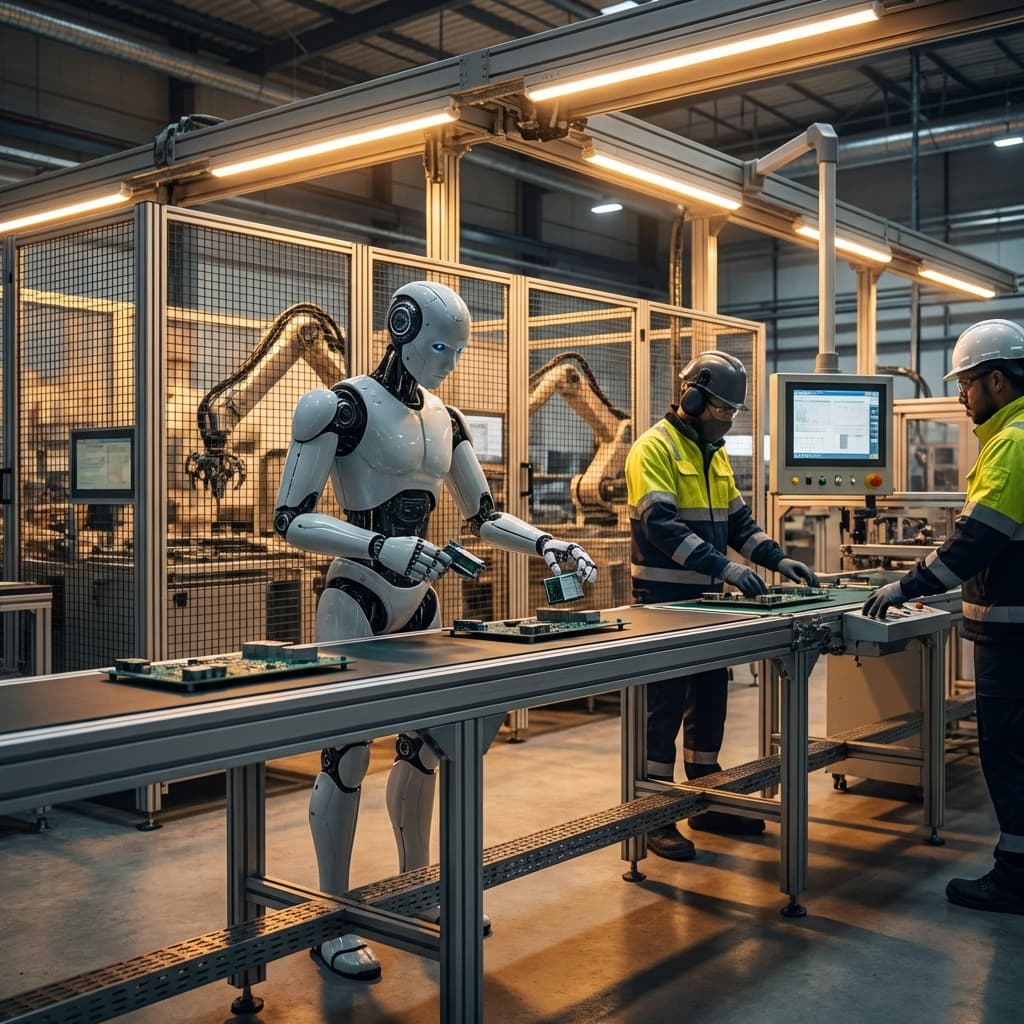
Summary: The deployment of general-purpose humanoid robots has moved from viral videos to production lines. With Hyundai’s full-scale integration of Atlas in Georgia, the industry has a blueprint for “brownfield automation”—automating spaces built for humans, not machines.
1) Executive Summary
In January 2026, the $16.7 billion industrial robot market[1] reached an inflection point with the full-scale deployment of Boston Dynamics’ electric Atlas at Hyundai’s Georgia EV plant. Unlike specialized robotic arms that require safety cages and precise fixturing, these next-gen humanoids navigate unstructured environments, manipulate flexible materials (like wiring harnesses), and work alongside human teams without physical barriers. This analysis dissects the technical capabilities driving this shift, the economic reality of $18/hour operating costs[2], and the safety protocols required for human-robot collaboration in high-density manufacturing.
2) The Deployment Context: Why Humanoids?
For 40 years, automation meant “specialized robotics”: bolted-down arms designed to weld the exact same spot 5,000 times a day. They are perfect for repetitive, high-speed, high-precision tasks.
But factories are full of tasks that are variable, mobile, and unstructured.
- Restocking parts bins at different heights.
- Inspecting finished vehicles for random defects.
- Plugging in flexible charging cables.
Traditional automation fails here. Retooling a factory for robots is expensive. Humanoid robots solve this by fitting into the existing human-centric infrastructure—stairs, narrow aisles, and standard workbenches—without requiring a facility redesign.
3) Technical Capabilities: Atlas & Competitors
The 2026 generation of humanoids, led by Atlas (Electric), Tesla Optimus Gen 3, and Figure 02, share distinct technical advantages over their hydraulic predecessors.
Hardware Specifications (Reference Class)
- Actuation: Fully electric (silent, high-torque density, no hydraulic leaks).
- Degrees of Freedom: 28+ (matching human range of motion).
- Payload: 15-20kg (sufficient for 90% of warehouse/assembly tasks).
- Battery Life: 4-6 hours active duty (swappable batteries allow 24/7 distinct uptime).
The AI Brain: “Visuomotor Policies”
The breakthrough isn’t the legs; it’s the brain. Modern humanoids use end-to-end visuomotor transformers. Instead of hard-coded paths (“Move arm X to coordinate Y”), the robot learns tasks by watching videos of humans.
- Data Input: RGB-D cameras + Proprioceptive sensors.
- Processing: Onboard NVIDIA Jetson Thor or Alpamayo chips[3].
- Output: Direct motor torques.
This allows robots to “generalize.” If a part is shifted 5cm to the left, the robot adjusts instantly, just like a human would. Old robots would just crash.
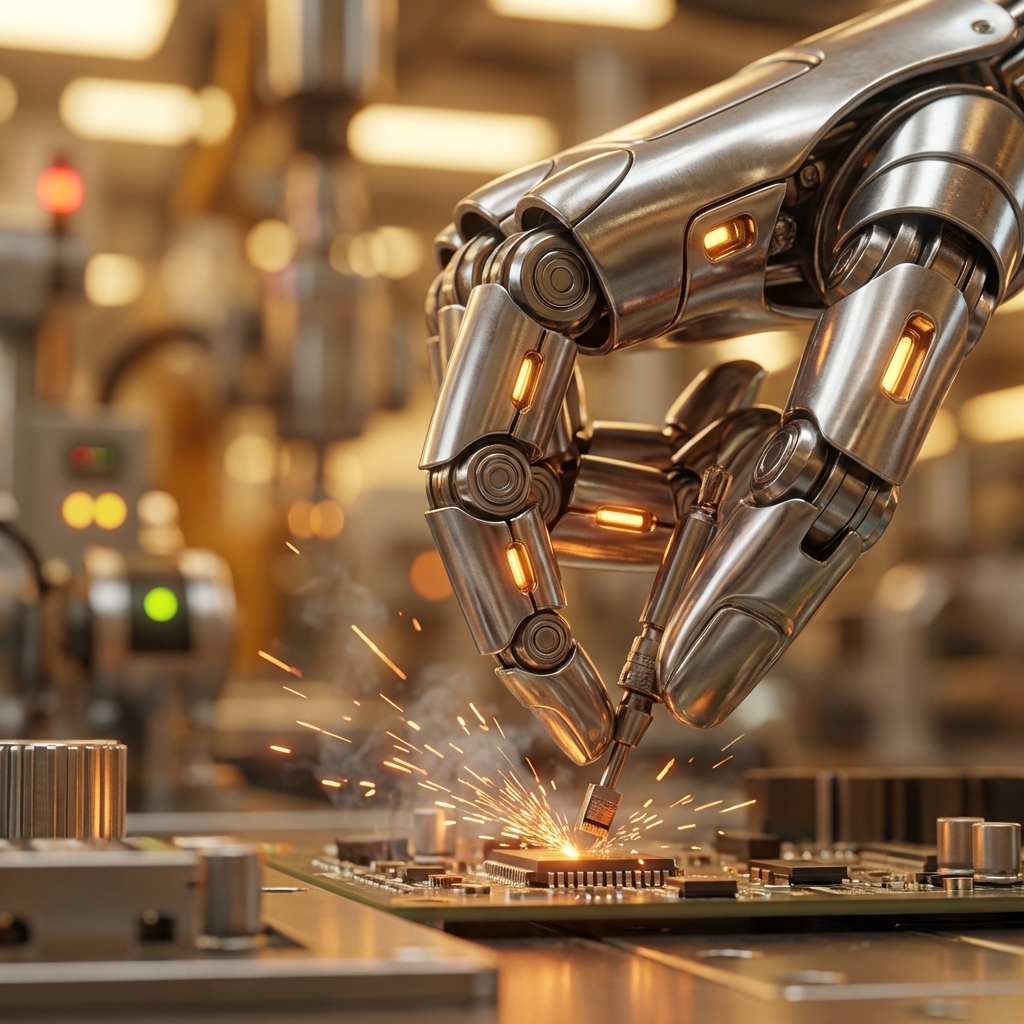
4) Hyundai Case Study: Atlas in Georgia
Hyundai’s deployment of Atlas in their Metaplant America (HMGMA) offers the first statistically significant dataset for production use.
- Role: Final Assembly & Logistics. Tasks include installing flexible wiring harnesses and autonomous kitting (moving parts from storage to line).
- Scale: Initial fleet of 50 units, scaling to 250 by Q4 2026.
- Performance:
- Uptime: 98.5% (comparable to AGVs).
- Cycle Time: 1.2x human speed for walking; 0.9x human speed for fine manipulation[4].
- Error Rate: <0.05% on component insertion.
Strategic Insight: Hyundai didn’t just buy robots; they integrated them into the factory’s Digital Twin. The robots know the real-time location of every AGV and human worker, preventing bottlenecks before they happen.
5) Economic Analysis & ROI
The economics of humanoid robots are shifting rapidly as production volumes increase.
| Cost Metric | Human Worker (US Auto) | Humanoid Robot (2026) | Traditional Arm |
|---|---|---|---|
| Upfront Cost | $4,000 (Hiring/Training) | $45,000 - $75,000 | $35,000 + $20k Safety Cage |
| Hourly Opex | $45 - $65 (include benefits) | $3 - $5 (Energy + Maint) | $1 - $2 |
| Availability | 40 hours/week | 160 hours/week | 168 hours/week |
| Flexibility | High (Instant learning) | Medium (Few shots learning) | Low (Weeks of reprogramming) |
| Payback Period | N/A | 11 - 14 Months | 18 - 24 Months |
The “$20/Hour” Barrier: At an amortized cost of ~$18-20/hour (including hardware depreciation over 5 years and service contracts), humanoids are now cheaper than human labor in Western manufacturing hubs, even for complex tasks[5].

6) Safety & Collaboration Protocols
Safety is the #1 barrier to adoption. A 180lb metal object moving autonomously is a risk.
- ISO/TS 15066: The standard for collaborative robots (cobots) is being adapted for mobile humanoids.
- Force Limiting: Motors have hardware-level torque limits. If the robot hits an obstruction (or person), it stops instantly, exerting non-lethal force.
- Semantic Awareness: The AI doesn’t just see “obstacles”; it recognizes “Human - Supervisor” vs “Human - Visitor” vs “Forklift.” It predicts the human’s path and yields right-of-way.
7) Future Outlook (2026-2030)
- 2026 (Now): “Brownfield” pilots. Robots filling gaps in existing lines. High-value, dangerous, or repetitive tasks (lifting heavy batteries).
- 2027-2028: The “Generalist” Phase. Robots moving between tasks dynamically. A robot might unload a truck in the morning and do quality inspection in the afternoon.
- 2030: “Lights Out” Segmentation. Entire sections of factories designed only for humanoids—removing lighting, HVAC, and safety aisle width requirements to drastically reduce building costs.
8) Key Takeaways
- Form Factor: The humanoid form is not about vanity; it is an api-compatibility layer for human infrastructure.
- Software Defined: The hardware is commoditizing; the differentiator is the Foundation Model driving the behavior.
- Labor Augmentation: The immediate goal is addressing the 2.1 million unfilled manufacturing jobs projected by 2030, not replacing existing staff.
- Infrastructure: Successful deployment requires a robust industrial Wi-Fi/5G network and a digital twin for orchestration.
[1] IFR (International Federation of Robotics), “Top 5 Global Robotics Trends 2026,” Jan 2026.
[2] Amiko Consulting, “The January 2026 AI Revolution in Manufacturing,” Jan 2026.
[3] NVIDIA Technical Blog, “Project GR00T and Jetson Thor Architecture,” 2025.
[4] Hyundai Motor Group, “HMGMA Automation Report Q1 2026.”
[5] Dig.Watch, “Robotics Industry Trends 2026,” Dec 2025.
Related Articles

Multi-Agent Orchestration Patterns: Architecting the "Swarm" Enterprise
Architecture guide for coordinating autonomous agent swarms. We cover the Master-Agent delegation pattern, the Model Context Protocol (MCP), and how to debug non-deterministic distributed systems.

Edge AI Deployment Strategies 2026: Bringing Frontier Models to Issues
A technical guide to deploying LLMs on smartphones and IoT devices. We cover model distillation, 4-bit quantization, and the Apple Neural Engine vs Snapdragon NPU landscape.

AI Cybersecurity Evolution 2026: The Era of Autonomous Defense
Analyzing the shift from reactive security to autonomous threat detection. We examine the 82:1 AI agent-to-human ratio, the rise of "Deepfake Identity Attacks," and the zero-trust architectures required to survive.