NVIDIA Physical AI Platform: The "ChatGPT Moment" for Robotics (2026)
Analyzing NVIDIA’s CES 2026 announcements: Alpamayo chips, Project GR00T, and the "Physical AI" ecosystem. We examine the shift from hard-coded automation to embodied intelligence and the 22% manufacturing adoption rate.
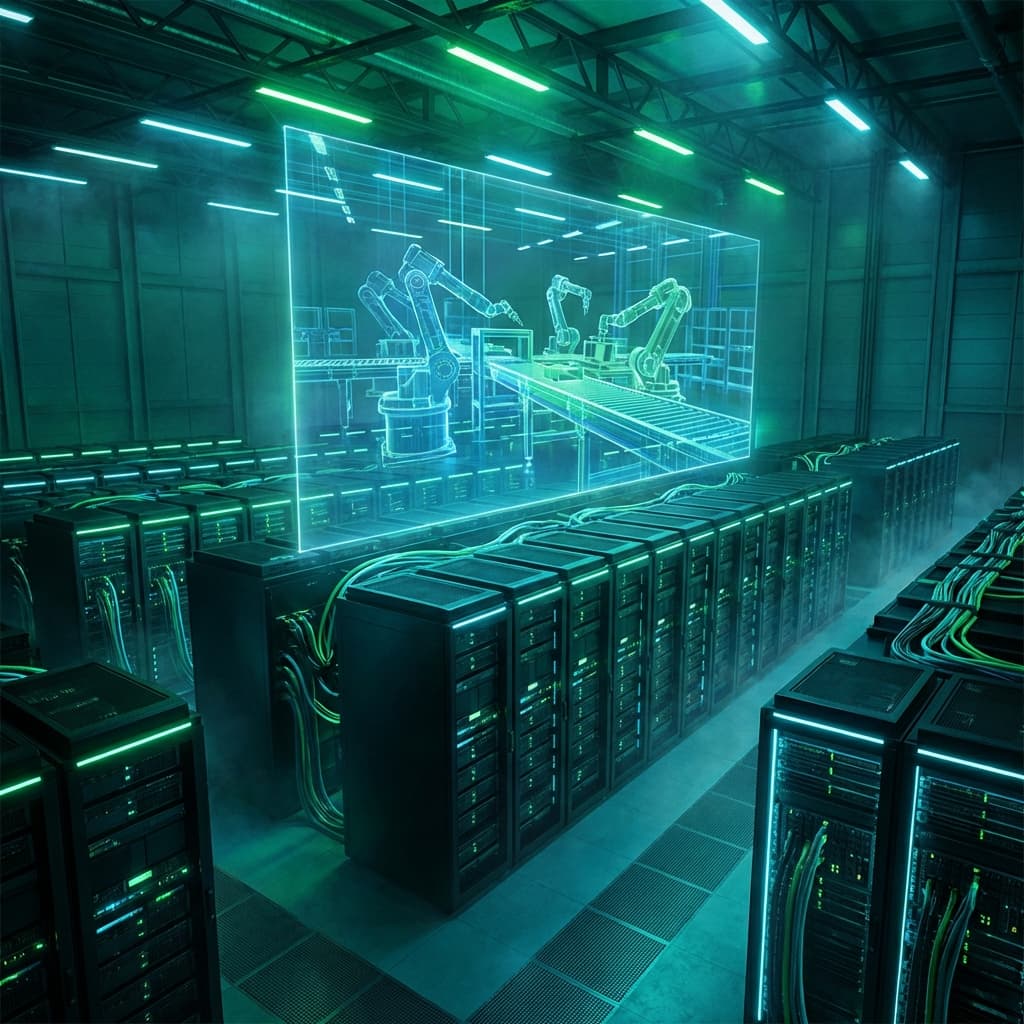
Summary: NVIDIA has successfully pivoted from “AI Training Chips” (H100/Blackwell) to “AI Inference for the Physical World.” With the release of the Alpamayo edge SoC and Project GR00T, they have provided the missing link for robotics: a standardized brain that learns physics as intuitively as LLMs learn language.
1) Executive Summary
At CES 2026, NVIDIA CEO Jensen Huang declared the arrival of the “Physical AI” era. The announcement wasn’t just marketing; it was backed by the release of Alpamayo, a dedicated robotic System-on-Chip (SoC) capable of running multimodal foundation models at the edge with <15W power consumption. This architecture has accelerated manufacturing AI adoption from 9% in 2024 to 22% in 2026[1]. This analysis examines the technical stack driving this shift, compares Alpamayo against competitors like Qualcomm and Mobileye, and details how “Digital Twins” have become the compiler for physical reality.
2) The Core Problem: Moravec’s Paradox
For decades, AI stumbled on Moravec’s Paradox: “It is comparatively easy to make computers exhibit adult level performance on intelligence tests or playing checkers, and difficult or impossible to give them the skills of a one-year-old when it comes to perception and mobility.”
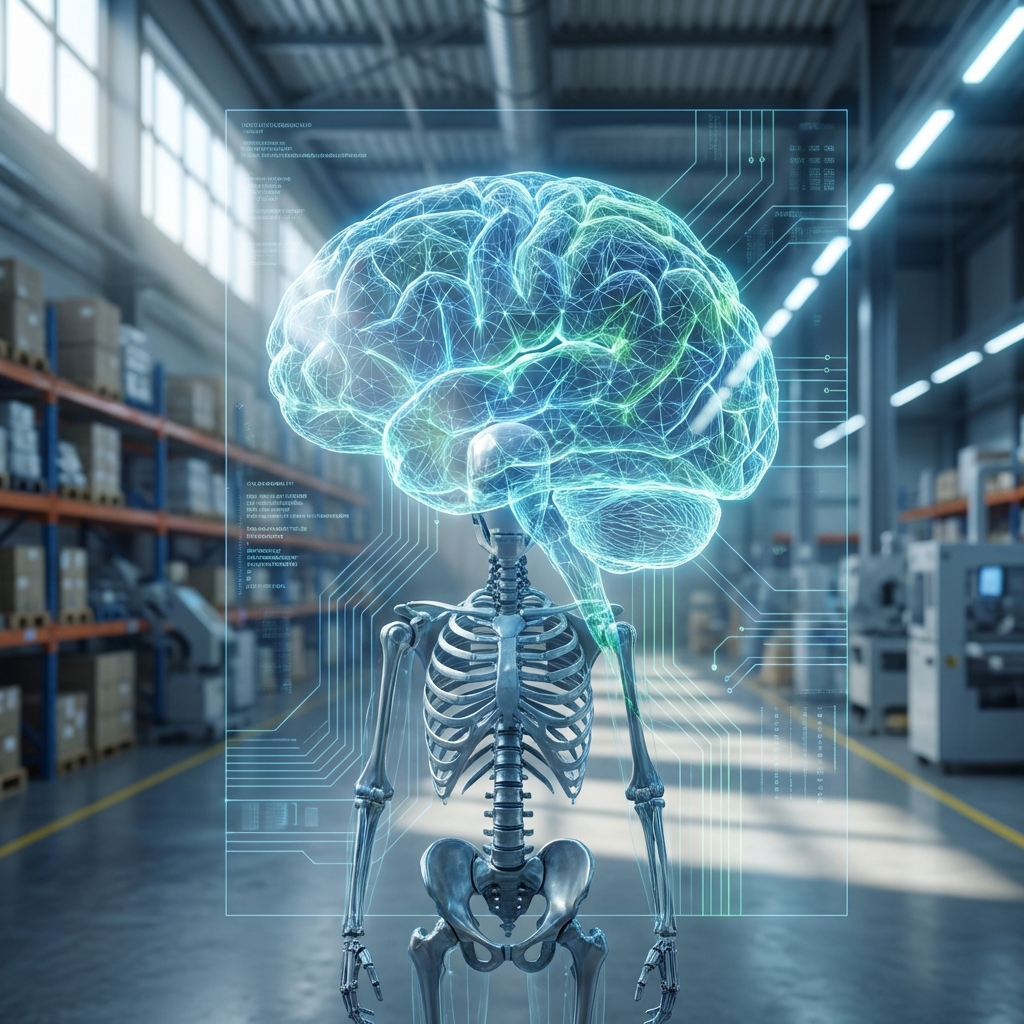
LLMs solved the “Checkers” part (Cognitive AI). But robots remained dumb because they couldn’t generalize friction, gravity, or contact dynamics. NVIDIA’s solution is Project GR00T (Generalist Robot 00 Technology), a foundation model that doesn’t just process text, but processes “Video in, Motor Torque out.”
3) Hardware Deep Dive: Alpamayo vs. The Field
The Alpamayo SoC is designed specifically for “Embodied Intelligence.” Unlike generic mobile chips, it prioritizes Sensor Fusion (lidar, radar, cameras) and Transformer Inference over graphics or cellular connectivity.
| Feature | NVIDIA Alpamayo (Robotics) | Qualcomm RB7 (IoT/Mobile) | Google Edge TPU v6 |
|---|---|---|---|
| Architecture | Blackwell-Edge GPU + Grace CPU | Hexagon NPU + Kryo CPU | Matrix Unit (ASIC) |
| Int8 TOPS | 2,500 TOPS | 800 TOPS | 400 TOPS |
| Power Draw | 15W - 75W (Scalable) | 5W - 15W | 2W (Accelerator only) |
| Memory Bandwidth | 512 GB/s (Unified) | 128 GB/s | N/A (PCIe) |
| Primary Use Case | Humanoids, heavy AVs | Drones, Light Robots | Sensors, Smart Cams |
Technical Insight: Alpamayo’s Unified Memory Architecture is the killer feature. It allows the giant GR00T model to reside in memory without copying data between CPU and GPU, reducing latency from 100ms (too slow for balance) to <10ms (human reflex speed).
4) The Ecosystem: Omniverse as the “Compiler”
If Alpamayo is the CPU, NVIDIA Omniverse is the IDE and Compiler.
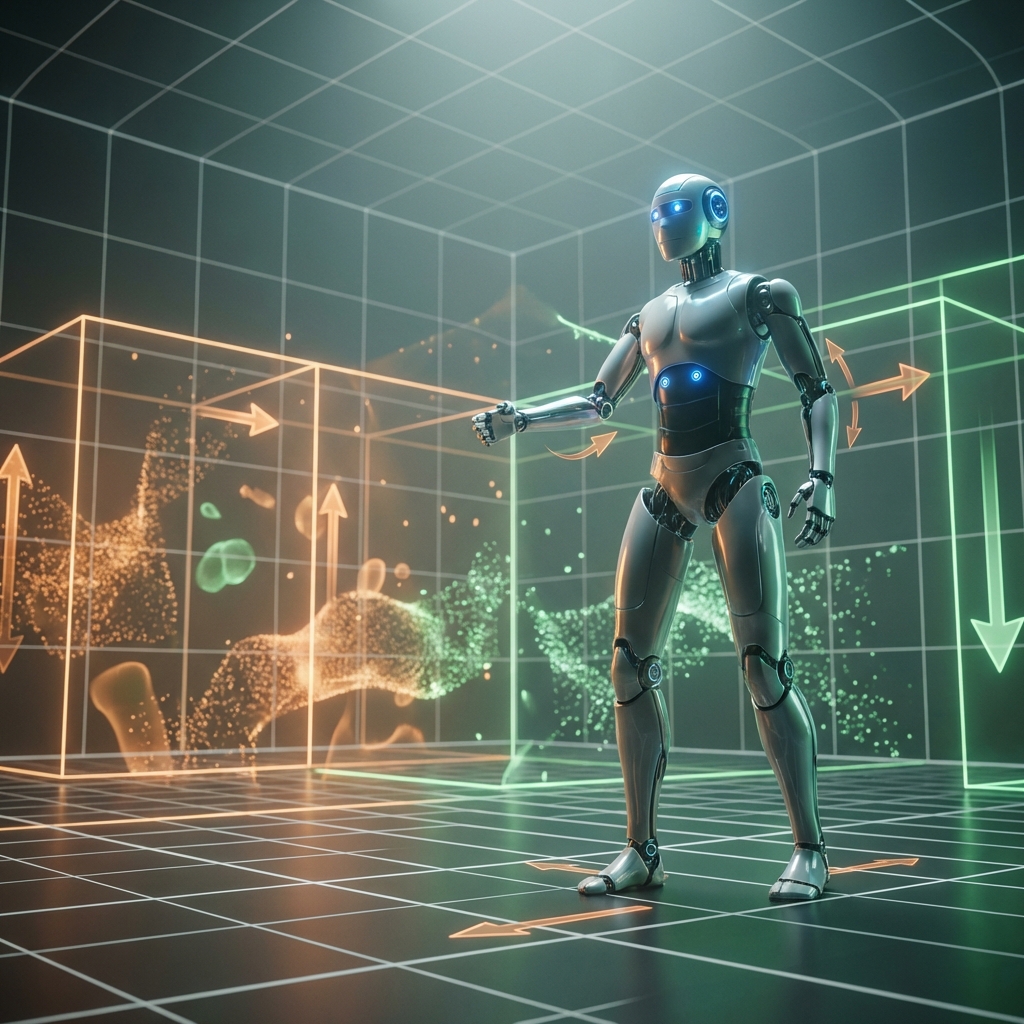
Training a robot in the real world is slow and dangerous. If a robot falls, it breaks. In Omniverse, NVIDIA simulates physics at 10,000x real-time speed.
- Isaac Sim: Robots learn to walk in a physics-accurate simulation.
- Domain Randomization: The sim changes floor friction, lighting, and object weight millions of times per second.
- The “Sim-to-Real” Gap: By 2026, this gap has effectively closed. A robot trained in Omniverse now works “out of the box” in the real world with >90% success rates[2].
5) Real-World Adoption: Manufacturing
Manufacturing is the beachhead market.
- BMW: Uses the platform to simulate entire factories before building them. They found that reconfiguring a line in “Digital Twin” saved 30% of downtime during the physical retooling.
- Foxconn: Deployed Alpamayo-powered arm robots for assembly. These robots inspect flexible PCBs (Printed Circuit Boards) that vary in shape. Traditional vision systems failed here; Physical AI succeeds by “understanding” the 3D geometry of the flex[3].
Metric: Adoption of “Adaptive Robotics” (robots that don’t need cages/programming) jumped to 22% of tiered suppliers in 2026[1].
6) Architecture: The “Edge-Cloud Hybrid”
Robots cannot rely on the cloud for balance (latency kills). But they need the cloud for Intelligence.
- Fast Loop (1000Hz on Alpamayo): “Stay upright,” “Don’t hit that person,” “Grip this cup.” (Reflexive).
- Slow Loop (1Hz on Cloud): “Go to the kitchen,” “Find the coffee beans,” “Plan a path through the crowd.” (Cognitive).
NVIDIA’s Isaac Lab manages this handoff seamlessly, allowing developers to write Python code that compiles to these distinct control loops.
7) Challenges & Limitations
- Power Hunger: Alpamayo consumes significantly more power than mobile chips. For battery-powered drones or small quadrupeds, it is often overkill and drains runtime.
- Data Scarcity: While we have trillions of tokens for LLMs (internet text), we lack “robot tokens” (real-world interaction data). NVIDIA is trying to solve this with simulation, but edge cases (wet floors, mirrors) remain tricky.
- Vendor Lock-in: The CUDA moat is even deeper in robotics. Once you build on Isaac ROS and Alpamayo, migrating to ROS2 on standard hardware is painful.
8) Future Outlook
- 2026: Humanoid robots (Figure, Tesla, Agility) standardize on NVIDIA compute locally.
- 2027: “Fleet Learning” becomes standard. When one robot learns to open a new type of door in Tokyo, every robot in New York downloads that skill overnight.
- 2030: The “Physical AI App Store.” Developers won’t write code; they will train skills (“How to fold a shirt”) in simulation and sell the model weights.
9) Key Takeaways
- Compute is the limiting factor for robotics, not mechanics. Alpamayo solves the compute bottleneck.
- Simulation is training. If you can’t simulate it, you can’t scale it.
- Hybrid Architectures win. Tightly coupled Edge (Reflex) + Cloud (Reasoning) is the standard design pattern.

[1] Amiko Consulting, “The January 2026 AI Revolution in Manufacturing,” Jan 2026.
[2] NVIDIA Technical Blog, “Closing the Sim-to-Real Gap with Isaac Lab,” 2026.
[3] Xenoss, “AI Trends 2026: The Year of Embodied AI,” Dec 2025.
[4] IBM, “AI Tech Trends Predictions 2026,” Jan 2026.
Related Articles
Digital Twins: Why Businesses Build Them (and Why Many Fail)
Digital twins can improve planning and operations by connecting models to reality, but they require disciplined data governance and change management. This article explains adoption in business terms—without hype.
Multi-Agent Orchestration Patterns: Architecting the "Swarm" Enterprise
Architecture guide for coordinating autonomous agent swarms. We cover the Master-Agent delegation pattern, the Model Context Protocol (MCP), and how to debug non-deterministic distributed systems.

Edge AI Deployment Strategies 2026: Bringing Frontier Models to Issues
A technical guide to deploying LLMs on smartphones and IoT devices. We cover model distillation, 4-bit quantization, and the Apple Neural Engine vs Snapdragon NPU landscape.