Reclaiming the Clock: How AI is Solving the Productivity Crisis
From bio-rhythm scheduling to corporate ROI, we analyze how AI tools like Motion and Reclaim.ai are combating 'time blindness' and reshaping the 2026 workday.
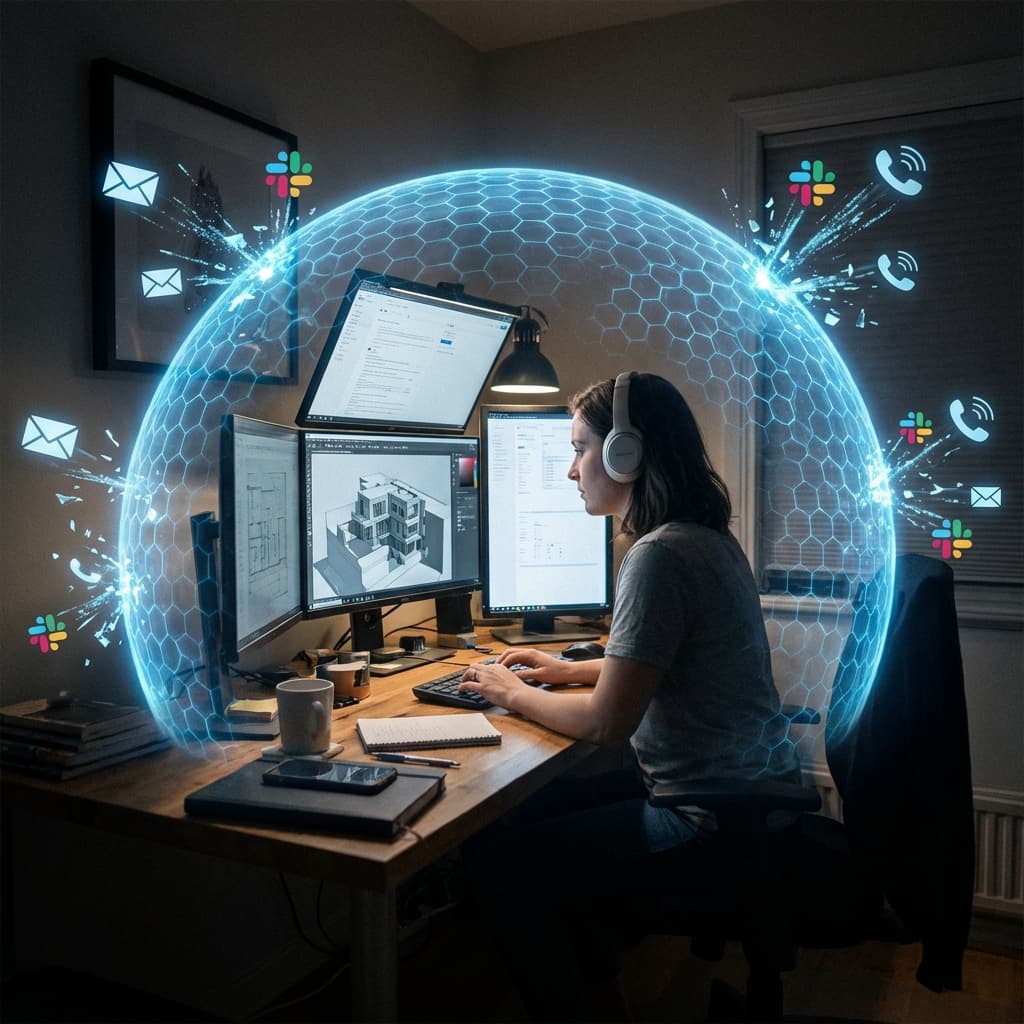
It is the modern worker’s greatest paradox: we have more tools to save time than ever before, yet we have never felt more rushed. The average knowledge worker checks their email every 6 minutes and spends just 46% of their day on actual skilled work. The rest is lost to the “shallow work” of scheduling, coordination, and the cognitive load of deciding what to do next.
In 2026, Artificial Intelligence has intervened. We are moving beyond static calendars that merely tell us where to be, to dynamic “Time Operating Systems” that tell us what to do and when.
The Death of the Static Calendar
Traditional calendars are passive containers. You put a meeting in, and it stays there, regardless of whether a fire drill erupts in your inbox or you slept poorly the night before. AI calendars are different; they are “liquid.”
Leading tools like Motion, Reclaim.ai, and Clockwise view time as a resource to be optimized, not just filled. They use algorithms to solve the “Knapsack Problem” of productivity: how to fit a shifting set of tasks (with varying priorities and deadlines) into a finite jar of time, while adhering to constraints like working hours and meeting availability.
The “Autopilot” Effect
Imagine waking up to a schedule that has already prioritized itself. You don’t have to wonder, “Should I write that report or answer emails?” The AI has analyzed your deadlines and estimated durations, and it tells you: “Write the report from 9:00 AM to 11:00 AM. Emails are scheduled for 4:00 PM.”
If an emergency meeting is booked over your report time, the AI doesn’t break. It instantly reshuffles your entire week, moving the report to the next best available slot and pushing lower-priority tasks to Friday. This is dynamic rescheduling, and it is saving the average user 2.5 hours per week in administrative coordination alone [[1]].
Comparative Analysis: The Big Three
The market has consolidated around three dominant players, each solving a different part of the equation.
| Feature | Motion | Reclaim.ai | Clockwise |
|---|---|---|---|
| Philosophy | “Project Management on Autopilot” | “Defensive Calendaring” | “Team Bandwidth Optimization” |
| Core Mechanic | Aggressive, minute-by-minute task scheduling & reshuffling. | Blocking “Habits” and preserving buffers on Google Calendar. | Moving flexible meetings to create “Focus Time” blocks. |
| Best For | Neurodivergent users, Solopreneurs, High-output individuals. | Corporate employees protecting time from colleagues. | Large teams trying to reduce meeting fragmentation. |
| Key AI Feature | Happiness Algorithm: Optimizes for finishing work by deadline vs. working late. | Smart Habits: “Find time for lunch between 11 AM and 2 PM.” | Meeting Reshuffle: Automatically moves team stand-ups to free up afternoon blocks. |
| Cost | Premium ($19-$34/mo) | Freemium / Mid-tier | Freemium / Enterprise |
AI as an Executive Function: The ADHD Revolution
Perhaps the most profound impact of these tools is on the neurodivergent community. For individuals with ADHD, “Time Blindness”—the inability to sense the passing of time or estimate how long a task will take—is a crippling disability.
The External Frontal Lobe
AI acts as a prostheses for the brain’s executive function.
- Visualizing the Invisible: Apps like Tiimo and Motion turn abstract “to-do” lists into concrete visual blocks on a timeline. Seeing a task take up physical space on a screen helps ground it in reality.
- Breaking the “Wall of Awful”: Large tasks feel insurmountable to an ADHD brain, leading to paralysis. AI tools can now automatically decompose a task like “Write Annual Report” into 20 sub-steps (e.g., “Open document,” “Find Q1 data”), reducing the friction of starting.
- Dopamine Gamification: New features in 2026 use subtle gamification. Completing a task “unlocks” focus time or provides a verified “streak,” tapping into the dopamine reward pathways that are often under-stimulated in ADHD brains [[5]].
A 2025 study from the Journal of Digital Medicine found that adults with ADHD using AI scheduling assistants reported a 40% reduction in “task paralysis” and a significant decrease in work-related anxiety compared to those using standard paper planners [[8]].
The Neuroscience of Flow: Protecting the Deep Work
It’s not just about doing more; it’s about doing better. Cal Newport’s concept of “Deep Work”—distraction-free concentration—is becoming increasingly rare. But why is it so hard to achieve?
The Cost of Context Switching
Neuroscience tells us that every time you switch from a spreadsheet to a Slack message, your brain experiences “attention residue.” A part of your processing power remains stuck on the previous task. It takes an average of 23 minutes to fully regain focus after an interruption. Clockwise fights this by “defragmenting” your day. Its algorithm groups meetings back-to-back, creating long, uninterrupted blocks of 2-4 hours. In 2025, research confirmed that these consolidated blocks are essential for achieving Flow State—a neurological condition of “transient hypofrontality” where the self-critical prefrontal cortex quiets down, allowing for peak creativity and pattern recognition [[14]].
The results are measurable: Teams using aggressive AI defragmentation report a 24% increase in focus time, directly correlating with higher code quality in engineering teams and faster creative output in marketing departments [[6]].
- Contextual Awareness: Microsoft’s Copilot is evolving to understand the content of your work. It might suggest, “You have a client meeting in 3 days. Should I schedule 2 hours for preparation and surface the relevant emails now?” [[17]].
The Limits of Prediction
However, we must remain vigilant against over-reliance. Algorithms are historical engines—they predict the future based on the past. They cannot predict a sudden burst of inspiration, a family emergency, or the simple human need for spontaneity. A strictly algorithmic life is efficient, but it risks becoming robotic. True productivity requires leaving room for the uncomputable variables of life.
The Next Frontier: Bio-Rhythm AI
The most exciting development in 2026 is the integration of predictive AI with biological data. We are moving from “Time Management” to “Energy Management.”
Syncing with Your Physiology
New tools like Lifestack and the latest Motion updates now integrate with wearables like the Oura Ring and Apple Watch.
- The Energy Map: The AI doesn’t just see a blank slot at 2:00 PM; it sees your biometric data. It knows your “Readiness Score” is low because you slept poorly.
- Proactive Adjustments: Instead of scheduling a high-cognitive-load task like “Strategic Planning” for that afternoon slump, the AI automatically swaps it for “Low Energy Admin” tasks (like expense reporting).
- Chronotype Optimization: The system learns your natural rhythm. If you are a “Night Owl,” it will aggressively defend your 10:00 AM - 12:00 PM slot for sleep or slow startup, shifting intense work to your peak window of 4:00 PM - 7:00 PM [[1]][[2]].
This is a paradigm shift. We are no longer forcing humans to work like machines (linear, constant output). We are using machines to help humans work like humans (cyclical, variable output).
The Corporate ROI: Case Studies from the Field
While individual productivity is valuable, the enterprise impact is transformative. In 2025, major corporations moved beyond pilot programs to full-scale adoption.
Hilton Hotels & DHL
Logistics and hospitality giants have used AI scheduling to solve the complex puzzle of shift work. By analyzing historical demand data, AI tools forecasted staffing needs with 95% accuracy.
- The Result: Hilton reported improved staff satisfaction scores because schedules were released earlier and were more predictable.
- The Bottom Line: For DHL, optimizing warehouse staffing reduced operational costs by 12% while simultaneously reducing overtime burnout [[3]].
The Audit Firm Transformation
A global certification company automated the scheduling of its 49,000 annual audits. Previously, this was a manual process taking schedulers one month per quarter. The AI system now completes the entire schedule in 12 minutes.
- Efficiency: This saved 147,523 kilometers of unnecessary travel by optimizing routes.
- ROI: The return on investment for such systems is often realized in less than 8 months, with some firms reporting a 300% ROI due to administrative labor savings [[3]][[7]].
The Privacy Trade-Off: Who Owns Your Schedule?
To work effectively, these AIs need to know everything about you: your deadlines, your meetings, your habits, even your sleep schedule. This creates a massive data honeypot.
The “Shadow Calendar” Risk
In 2025, corporate IT departments began cracking down on “Shadow AI”—unapproved tools connecting to company Outlook servers.
- The Leak: If you connect a personal AI scheduler to your confidential work calendar to “optimize your life,” you may be inadvertently uploading sensitive meeting titles (e.g., “Project X Acquisition”) to a third-party server training its model.
- EU Compliance: Under the new AI Act, calendar data that infers behavioral patterns (like religious observance based on recurring “unavailable” times) serves as “sensitive biometric data,” requiring stricter consent protocols.
- The Solution: Enterprise-grade tools are now launching “Local-First” models or “Zero-Retention” guarantees, promising that your schedule data is used only for your instance and never enters a global training set [[13]][[17]].
Conclusion: Mastering the Machine
AI time management is not a magic wand. If you feed the machine garbage (unrealistic functional goals), it will schedule a burnout. The most successful users are those who use the AI to handle the logistics of time, so they can focus on the energy of execution.
We are entering an era where “I didn’t have time” is no longer a valid excuse—only “I didn’t prioritize it.” And for the first time in history, we have a machine that ensures our priorities actually make it onto the calendar.
References
[1] Lifestack. “Bio-Rhythm Integration with Oura.” 2025. lifestack.ai [2] Efficient App. “Motion vs Reclaim vs Akiflow.” 2025. efficient.app [3] SuperAGI. “Corporate AI Adoption Case Studies: Hilton & DHL.” 2025. superagi.com [4] HumAI Blog. “How AI is Reshaping the Calendar.” humai.blog [5] Substack. “Subtle Gamification in ADHD Tools.” 2025. substack.com [6] GetClockwise. “The State of Focus Work 2025.” getclockwise.com [7] MyShyft. “ROI of AI Scheduling in Enterprise.” myshyft.com [8] Psypost. “AI Scheduling and ADHD Executive Function.” Oct 2025. psypost.org [9] Skywork AI. “Comparative Analysis of Productivity AIs.” skywork.ai [10] Workday. “The Economic Impact of AI Productivity.” 2025. workday.com [11] McKinsey & Company. “Generative AI and the Future of Work.” 2025. mckinsey.com [12] CreateGrow. “Best Planners for Neurodivergent Brains.” createandgrow.com [13] GDPR Local. “AI Calendar Data and Privacy Compliance.” gdprlocal.com [14] ScienceDaily. “Neuroscience of Flow and Productivity.” 2025. sciencedaily.com [15] Goodwin Law. “US State Privacy Laws 2025 Update.” goodwinlaw.com [16] ConsentMo. “Consumer Rights in the Age of AI.” consentmo.com [17] Cloud Security Alliance. “Security Risks in AI Scheduling Agents.” cloudsecurityalliance.org
Related Articles
The Death of 'Nothing to Wear': Inside the Rise of the Wardrobe AI
From smart mirrors that critique your outfit to algorithms that shop for you, we explore how AI is redefining personal style and ending fast fashion waste.
The Monk in the Machine: How AI is Decoding Nirvana
From AI-generated soundscapes that adapt to your heart rate to headbands that gamify zen, we explore the intersection of technology and ancient mindfulness.
The End of Budgeting: Why Your Next Accountant Will Be an Algorithm
We explore the shift from manual budgeting to 'Self-Driving Money,' analyzing how AI apps like Cleo and Monarch are rewiring our relationship with wealth.