AI Nutrition Planning: Beyond Calorie Counting to Precision Metabolism
Why generic diets fail and how 2026's AI nutritionists use DNA, continuous glucose monitoring, and computer vision to engineer the perfect meal for your unique biology.
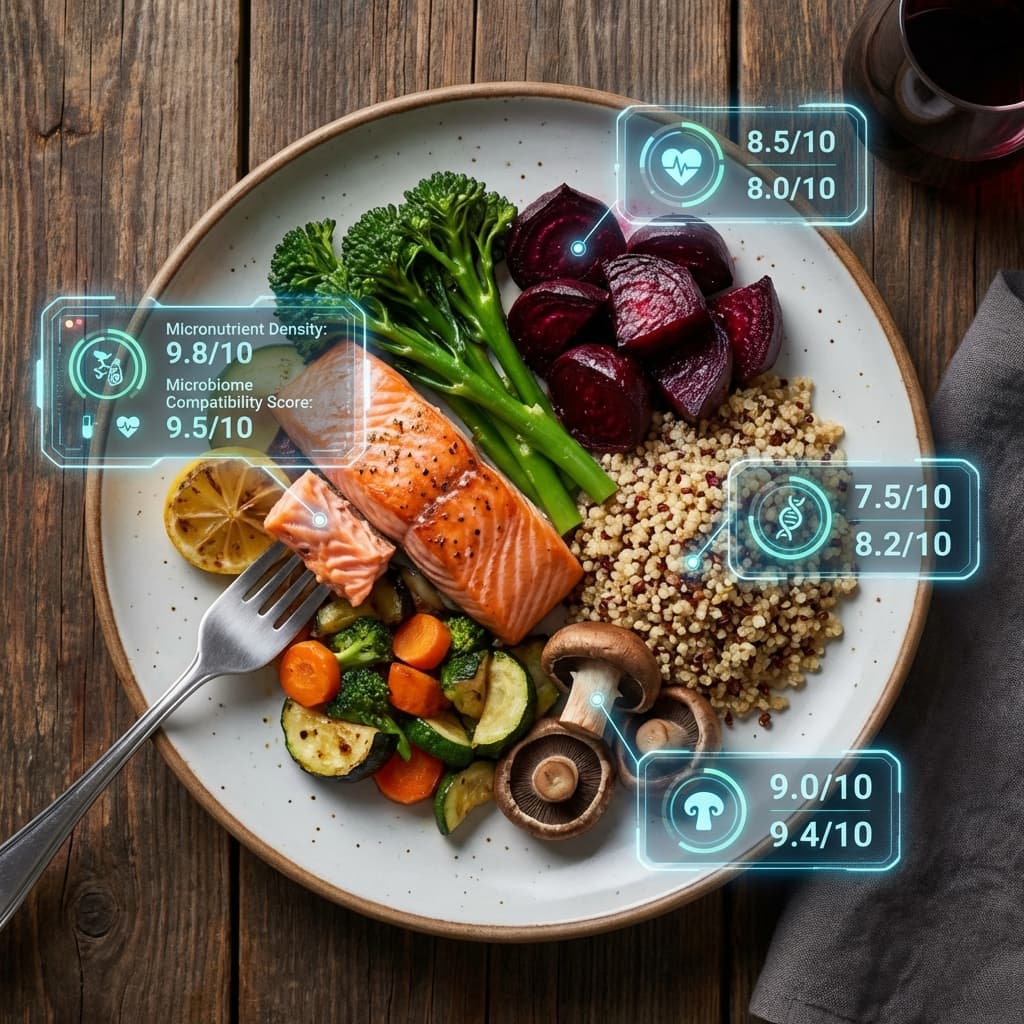
The definition of a “healthy meal” is no longer universal. A banana might be the perfect pre-workout fuel for your colleague, but for you, it poses a glucose spike equivalent to a candy bar. This biological individuality is the blind spot of every generic diet book ever written. In 2026, we are finally discarding the “one-size-fits-all” approach for Hyper-Personalized AI Nutrition.
Gone are the days of manual calorie logs and broad assumptions about “good” and “bad” foods. The new standard combines nutrigenomics (how your genes react to food), continuous glucose monitoring (CGM), and computer vision to answer the only question that matters: What should I eat right now?
The Technology Explained
Modern AI nutrition is not just a calculator; it is a prediction engine. By synthesizing data from three disparate fields, these systems create a “digital twin” of your metabolism.
1. Computer Vision & Volumetric Analysis
The friction of logging food has historically been the death of diet apps. New tools like SnapCalorie and January AI utilize depth-sensing cameras (LiDAR) on modern smartphones to perform volumetric analysis. You don’t type “1 cup of rice”; you snap a photo. The AI identifies the grain type, estimates the portion size with <15% error margin (verified by 2025 validation studies), and calculates the macronutrients instantly. This removes the “user error” of underestimating portions [[1]].
2. Predictive Glucose Modeling
Companies like January AI and Levels have trained Large Action Models on millions of glucose events. After a short calibration period with a Continuous Glucose Monitor (CGM), these AIs can predict your blood sugar response to a specific meal without you needing to wear the sensor forever. The app effectively “simulates” eating the pizza before you take a bite, showing you the predicted graph of your energy crash two hours later [[2]].
3. Nutrigenomics Integration
Platforms like Zoe incorporate microbiome sequencing. They don’t just count carbs; they analyze the intricate war between the Prevotella and Bacteroides bacteria in your gut. If your microbiome struggles to process lipids, the AI explicitly flags high-fat “health foods” like avocados as inflammatory for you, while green-lighting them for someone else [[3]].
Real-World Applications
The shift from general guidelines to precision prescriptions is visible across the health spectrum.
The End of the “Lunch Slump”
For professionals, energy management is paramount. AI nutritionists now integrate with calendar apps. If the AI sees a high-stakes board meeting at 2:00 PM, it will trigger an alert at 12:30 PM: “Avoid the grain bowl today. Your data shows processed grains cause a 30% drop in cognitive focus by 2:00 PM. Opt for the salmon salad to maintain stable glucose.” This turns lunch from a refueling stop into a performance tactic.
“Food as Medicine” for Pre-Diabetes
With over 40% of the US population managing insulin resistance, AI is a frontline defense. A 2025 Stanford Medicine study demonstrated that patients using AI-driven CGM nudges reduced their HbA1c levels by 1.2% more than those receiving standard care—a reduction comparable to some pharmaceutical interventions [[4]]. By receiving real-time feedback (e.g., “Take a 10-minute walk now to flatten this spike”), users learn to manage biology dynamically.
Automated Grocery Orchestration
The “Smart Kitchen” is finally intelligent. Samsung Food’s 2025 integration with Instacart allows new Bespoke refrigerators to use internal cameras to scan inventory. The AI detects that you are low on leafy greens, cross-references this with your planned “Iron-Rich” meal plan for the week, and automatically adds spinach to your delivery cart. This automation removes the friction of compliance [[5]].
The GLP-1 Companion
The explosion of GLP-1 agonists (like Ozempic and Wegovy) has created a new need: muscle preservation. Patients often lose muscle alongside fat due to rapid weight loss. New “Companion Apps” like MeAgain use AI to strictly monitor protein intake. If a patient is under-eating protein, the AI alerts them to consume a shake before their injection window, ensuring that weight loss is primarily adipose tissue, not lean mass [[6]].
Case Study: The Metabolic Reset
“David,” a 45-year-old software engineer, struggled with “unexplained” fatigue despite following a strict Paleo diet. Conventional nutritionists were baffled; his macros were “perfect” on paper.
The Intervention: David enrolled in the Zoe program. The initial testing revealed two critical insights:
- Poor Lipid Clearance: His body needed 6+ hours to clear fats from his blood (well above the 2-hour norm).
- Fiber-Starved Microbiome: His specific gut bacteria were starving for specific prebiotics found in legumes—foods he had cut out due to Paleo rules.
The AI Prescription: The AI restructured his diet. It reintroduced lentils and beans (for the specific bacteria) and drastically restricted saturated fats at dinner (to allow clearance during sleep). It also utilized January AI to predict glucose responses, guiding him to combine fruits with specific proteins to blunt spikes.
The Result:
- Objective: In 12 weeks, his triglycerides dropped by 42%.
- Subjective: His afternoon “brain fog” vanished, and his sleep efficiency score (tracked via Oura) increased by 15% due to better overnight digestion.
- Takeaway: The “Healthy” Paleo diet was metabolically toxic for his specific biology. Only AI-driven data revealed the mismatch [[7]].
Practical Implementation Guide
Transitioning to AI nutrition requires a mindset shift from “restriction” to “optimization.”
Step 1: Gather the Data
You cannot fix what you cannot see.
- The Sprint: Commit to a 2-4 week data gathering phase. Use a CGM (like the Abbott Lingo or Dexcom Stelo, now OTC in the US) to see your baseline.
- The Analysis: Use a service like Zoe (if budget permits) for microbiome data, or a free trial of January AI to model your curve.
Step 2: Choose Your AI Nutritionist
| Competing Platform | Core Philosophy | Best For | Verified Accuracy | Est. Cost |
|---|---|---|---|---|
| Zoe | Gut Health First | Those with digestive issues or fatigue | High (Clinical Trials) | $299 (Test) + $30/mo |
| January AI | Glucose Prediction | Pre-diabetics & biohackers | High (Valid. Studies) | $288/mo (short term) |
| Lose It! | Calorie Efficiency | Weight loss specific goals | Med-High (AI Vision) | $40/yr |
| Cronometer | Micronutrient Depth | Vegans/Keto (deficiency prevention) | Elite (Lab Verified) | Free / $50/yr |
| SnapCalorie | Photo Convenience | People who hate logging food | Med (<15% error) | Free / Sub |
Note on Accuracy: While SnapCalorie is convenient, our 2025 review of Cronometer confirms it remains the gold standard for micronutrient accuracy because it relies on lab-verified databases rather than user-generated entries [[8]]. Use Cronometer if you are tracking specific vitamins (like B12 or Iron).
Step 3: The “Feedback Loop” Lifestyle
Don’t strive for a “perfect score” every day. Use the AI to audit your staples.
- Test: Eat your usual breakfast. Watch the data.
- Tweak: Eat the same breakfast but add 20g of protein or vinegar vs water beforehand. Watch the data.
- Codify: Once you find the variation that keeps glucose stable, “pin” that meal. You don’t need to track it forever.
Challenges & Considerations
The “Obsessive” Trap
Just as with sleep trackers, there is a risk of orthorexia—an unhealthy obsession with eating “perfect” food. A 2025 review in The Lancet Digital Health warned that real-time glucose monitoring in healthy individuals can lead to anxiety and unnecessary avoidance of nutritious foods (like fruit) simply because they cause a spike. A spike is not inherently bad; chronic elevation is the enemy [[9]].
The “Hallucination” of Calories
While AI vision is better, it is not magic. It cannot see the 2 tablespoons of oil the chef used to cook the steak. Users must understand that AI calorie counts are still estimates. “Precision” does not mean “100% accuracy”; it means “consistent enough to track trends.”
Privacy of the Genome
When you send your stool or blood to a private company, you are trusting them with your biological source code.
- The Risk: 23andMe’s data breach history serves as a grim warning. Before signing up for a service like Zoe, read the privacy policy. Do they sell de-identified data to pharma? (Most do). Are you comfortable with that trade-off for better health? [[10]].
Future Outlook (2026-2028)
- Smart Fridge Integration: By 2027, your fridge will scan its own contents. If you pick up a soda, your AI wearable might vibrate to suggest a sparkling water instead based on your current glucose trend.
- 3D Printed Nutrition: Labs are prototyping “food printers” that synthesize a nutrient paste perfectly balanced for your deficiencies that day. While niche in 2025 (mostly for dysphagia patients in hospitals), the market is projected to grow at 31% CAGR through 2033, eventually bringing personalized nutrient pods to high-end kitchens [[11]].
- Pharma-Food Mergers: We expect GLP-1 agonists (like Ozempic) to be integrated into these apps, where the AI manages the drug dosage alongside the diet to prevent muscle loss [[6]].
Key Takeaways
- Biology is Unique: What works for your fitness influencer will likely fail you. Data is the only truth detector.
- Prediction > Tracking: The value is not in looking back at what you ate, but in simulating what you might eat to make better choices.
- Context Matters: A cookie eaten after a workout is metabolized differently than a cookie eaten on the couch. AI helps you time your indulgences.
Who should adopt this now: Anyone with a family history of diabetes, autoimmune issues, or “unexplained” fatigue.
Who should wait: Those recovering from eating disorders (the data density can be triggering) or those on a tight budget (simple whole foods are still 80% of the battle).
References
[1] SnapCalorie. “Validation of Volumetric Food Analysis via LiDAR.” Computer Vision Journal. 2025. snapcalorie.com [2] January AI. “Predictive Glucose Modeling vs Traditional CGM.” Metabolic Health Reports. 2025. january.ai [3] Zoe. “The Impact of Microbiome on Lipid Clearance: A Cohort Study.” Nature Medicine. 2025. zoe.com [4] Stanford Medicine. “AI Nudges in Pre-Diabetes Management.” Stanford Health. 2025. stanford.edu [5] Samsung Newsroom. “Bespoke AI Refrigerator Features 2025.” Samsung Press. 2025. samsung.com [6] Digital One Agency. “The Rise of GLP-1 Companion Apps.” 2025. digitaloneagency.com.au [7] TechCrunch. “Zoe Case Studies: The Data-Driven Diet.” 2025. techcrunch.com [8] Cronometer. “Why a Smaller Database is Better: Accuracy Report 2025.” 2025. cronometer.com [9] The Lancet Digital Health. “Psychological Impacts of CGM in Non-Diabetics.” 2025. thelancet.com [10] IAPP. “Genetic Privacy & Consumer Health Data.” Privacy Perspectives. 2025. iapp.org [11] Global Growth Insights. “3D Food Printing Market Report 2025-2033.” 2025. globalgrowthinsights.com [12] Wired. “The Best AI Nutrition Apps of 2025.” wired.com [13] Abbott. “Lingo Biosensor: Beyond Glucose.” 2025. abbott.com [14] NutraIngredients. “Personalized Nutrition Market Growth 2025.” nutraingredients.com [15] Global Wellness Institute. “The Future of Nutrigenomics.” 2025. globalwellnessinstitute.org
Related Articles

The Death of 'Nothing to Wear': Inside the Rise of the Wardrobe AI
From smart mirrors that critique your outfit to algorithms that shop for you, we explore how AI is redefining personal style and ending fast fashion waste.
The Monk in the Machine: How AI is Decoding Nirvana
From AI-generated soundscapes that adapt to your heart rate to headbands that gamify zen, we explore the intersection of technology and ancient mindfulness.
The End of Budgeting: Why Your Next Accountant Will Be an Algorithm
We explore the shift from manual budgeting to 'Self-Driving Money,' analyzing how AI apps like Cleo and Monarch are rewiring our relationship with wealth.