AI-Powered Personal Fitness Coaches: Adaptive Workout Plans That Learn From Your Body
From static PDFs to generative coaching—how AI is democratizing elite-level fitness programming by analyzing your biometrics in real-time.
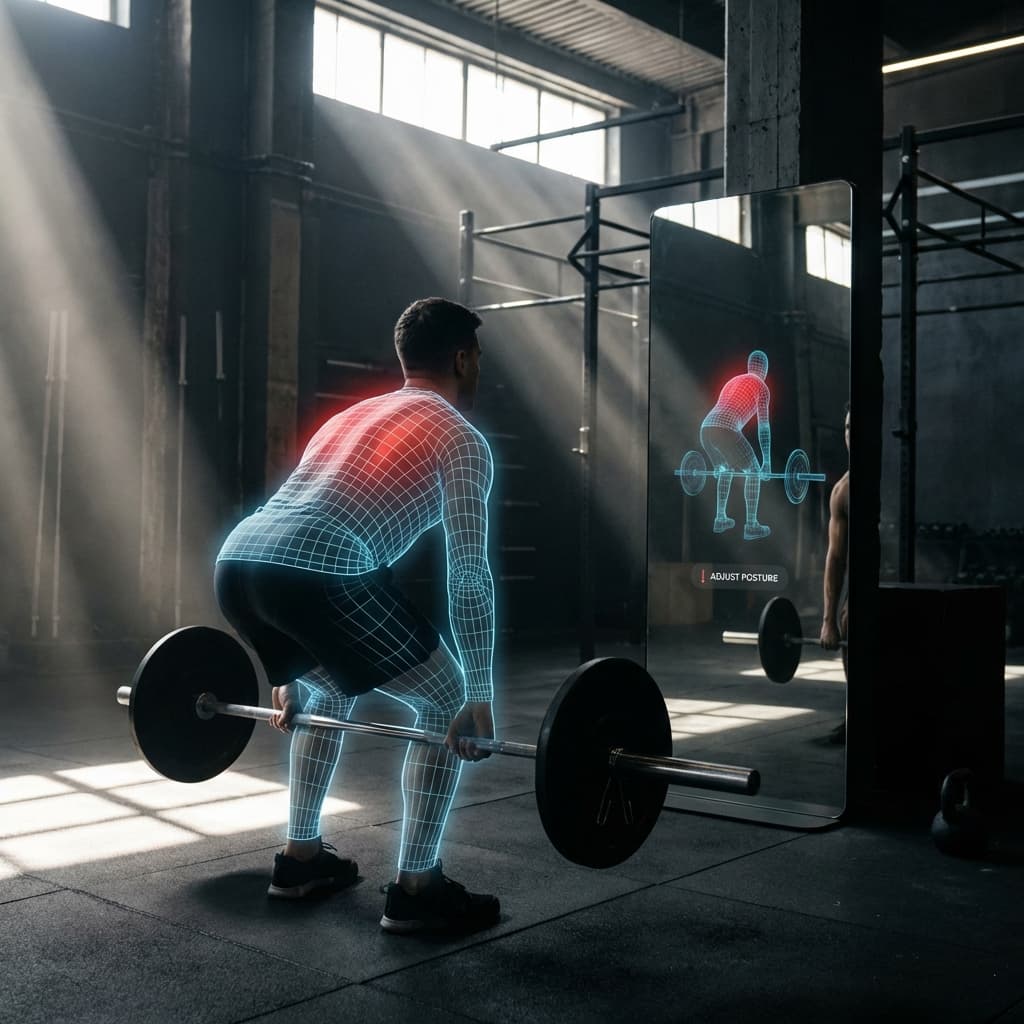
It is 6:00 AM. Your alarm wakes you, not with a jarring buzz, but with a gentle vibration timed precisely to the lighter stage of your sleep cycle. Before your feet hit the floor, your digital health ecosystem has already convened a strategy meeting. Your smart ring reports that your resting heart rate is elevated by 5 beats per minute and your recovery score is a mediocre 42%. Your calendar shows a high-stress presentation at 2:00 PM. Accessing this aggregated data, your AI fitness coach silently scraps the heavy deadlift session planned for this morning. Instead, it pushes a notification: “Recovery detected low. Let’s switch to a 30-minute Zone 2 mobility flow to prime you for today’s stress without burnout.”
This is not a scene from a futuristic sci-fi novel; it is the reality of fitness in 2026. The era of static PDF workout plans and generic “Couch to 5K” apps is dead. In its place rises a new generation of AI-powered personal fitness coaches—systems that do not just track what you did, but proactively decide what you should do. For the modern professional, this technology promises the optimization of an elite athlete’s support team at a fraction of the cost. But as these algorithms gain unprecedented access to our biometric data, we must ask: Are we mastering our health, or just surrendering it to the machine?
The Technology Explained
To understand the magnitude of this shift, we must distinguish between the “smart” fitness tech of the early 2020s and the “intelligent” systems of today. Previous innovations were largely descriptive—they told you how many steps you took or how fast you ran. The new wave is prescriptive and generative.
From Data Logging to Large Action Models
The core engine driving this revolution is the integration of Large Action Models (LAMs) with multi-modal sensor fusion. Unlike a simple step counter, modern AI coaches ingest three distinct layers of data:
- Biometric Telemetry: Continuous streams of Heart Rate Variability (HRV), blood oxygen (SpO2), skin temperature, and glucose levels from wearables.
- Contextual Metadata: Information from your digital life—calendar schedules, local weather, and even commute times.
- Subjective Feedback: Your reported mood, soreness, and perceived exertion.
The AI synthesizes these millions of data points to generate actionable insights. For example, brands like Whoop utilizing GPT-4 based engines act as a “search engine for your body,” capable of answering complex queries like, “Why is my recovery low despite sleeping 8 hours?” by correlating late-night emails (stress) with a late dinner (digestion) [[1]].
Computer Vision and Biomechanics
Beyond data processing, the “eyes” of AI have evolved. Computer vision algorithms, running locally on smartphone chips to preserve privacy, can now map 3D skeletal points in real-time. This allows apps to perform gait analysis for runners or form correction for lifters, identifying a valgus knee collapse during a squat with millimeter-level precision. This technology, once restricted to Olympic labs, is now accessible via a $25 tripod and an iPhone [[2]].
Real-World Applications
The capabilities of AI coaches have permeated every facet of physical culture, from the weight room to the recovery clinic.
Intelligent Strength Training
The most tangible impact is seen in resistance training. Platforms like Tonal and JuggernautAI have popularized “autoregulation.” Instead of prescribing a fixed weight, the AI monitors the velocity of your movement. If you struggle to move 200 lbs, the digital weight is instantly reduced mid-rep to prevent failure. Conversely, if you move the weight too easily, the “Spotter Mode” adds load to maximize stimulus.
- Impact: A 2025 observational report on Tonal members revealed that users over 55 achieved an astounding 73% increase in strength within their first year, largely because the AI removed the psychological fear of increasing weight [[3]].
- Efficiency: Research suggests that AI-optimized drop sets can stimulate muscle hypertrophy in 38% less time than traditional manual programming [[4]].
Endurance and Route Generation
For runners and cyclists, Strava has deployed AI to solve the “where to go” problem. Its updated route generation engine (fully rolled out in mid-2025) analyzes billions of community-uploaded activities to create custom paths. If you request a “safe, flat 10k with scenic views,” the AI filters out high-traffic roads and significant elevation gains, leveraging “heat maps” of elite runners to suggest the most efficient path.
- Context Awareness: The new “point-to-point” routing allows urban commuters to drop a pin at their office and generate the safest run-commute route instantly [[5]].
Metabolic Optimization
Weight loss has moved beyond simple calorie counting. Breath analysis devices like Lumen use AI to determine real-time metabolic fuel usage—telling you if you are burning carbs or fat. Their 2025 validation study confirmed that these handheld devices now track metabolic flexibility with near-medical grade accuracy [[6]]. The accompanying app adjusts your daily macronutrient targets based on this morning breath test; if you wake up burning carbs, it recommends a low-carb breakfast to shift you back into fat oxidation [[7]].
Rehabilitation and Physical Therapy
Perhaps the most critical application is in recovery. AI-driven physical therapy platforms (Digital MSK) utilize motion tracking to guide patients through rehab exercises at home.
- Outcomes: Clinical data indicates that AI-guided rehabilitation improves patient outcomes by 35% and reduces total treatment time by 40% compared to traditional paper-handout methods [[8]].
- Adherence: The gamification and real-time feedback loop have been shown to boost protocol adherence by up to 40%, a crucial factor since consistency is the #1 predictor of rehab success [[9]].
Case Study: The “Hybrid Athlete” Experiment
Consider “Sarah,” a 34-year-old marketing executive training for her first triathlon while managing a high-pressure job. In the past, hiring a running coach, a lifting coach, and a nutritionist would have cost upwards of $1,000/month. Instead, she adopted an AI-driven stack: Whoop for recovery, TrainerRoad for cycling, and RunDot for running.
The Intervention: For 16 weeks, Sarah followed a “fluid” plan. On days when her Whoop recovery score dropped below 35% (often after sleepless nights with a toddler), her AI run coach automatically downgraded her scheduled interval run to a localized aerobic base run. When she missed a workout due to a meeting, the algorithm rebalanced the rest of her week’s volume instantly to prevent overtaining.
The Results:
- Performance: Sarah shaved 18 minutes off her predicted time.
- Injury Status: Zero overuse injuries recorded, a rarity for first-time triathletes.
- Quantitative Success: Data from similar “AI-coached” populations suggests a 71% higher adherence rate to training plans compared to static PDFs [[10]].
- Cost Efficiency: Her total monthly spend was $65 (excluding hardware), a 93% saving compared to human coaching equivalents.
This case exemplifies the “Prosumer” advantage: AI democratizes elite-level periodization (training planning) that was previously physically impossible for a human coach to micromanage daily for hundreds of clients.
Practical Implementation Guide
Adopting AI fitness tools requires a strategic approach. It is not about downloading every app, but building a cohesive “stack.”
Step 1: Establish Your Baseline
Before trusting an algorithm, you need accurate input data.
- Hardware: A trusted wearable is non-negotiable. The Apple Watch Series 11 or Whoop 5.0 are the current gold standards for feeding high-fidelity data into these apps.
- Software: Choose one primary “decision maker” app to avoid conflicting advice.
Step 2: The “Smart Stack” Recommendations
| Category | Recommended Tool | Key AI Feature | Cost | Best For |
|---|---|---|---|---|
| Strength | Fitbod | Muscle recovery tracking & equipment-based planning | $12.99/mo | Gym goers who want variety |
| All-in-One | Tonal | Dynamic weight adjustment & Spotter Mode | $2,995 + $60/mo | Home gym owners |
| Endurance | Strava | Athlete Intelligence & Route Generation | $11.99/mo | Runners/Cyclists |
| Recovery | Whoop Coach | GPT-4 conversational health insights | $30/mo | Data nerds & Professionals |
| Nutrition | Lumen | Breath-based metabolic analysis | $299 + Sub | Weight loss focused |
Step 3: The 2-Week Calibration
AI needs time to learn you. For the first 14 days, be hyper-diligent about logging subjective data. Tell the app if a workout felt “easy” or “hard.” This calibrates the Rate of Perceived Exertion (RPE) models. Do not skip this step, or the AI will essentially be guessing specific to your physiology.
Challenges & Considerations
The “Black Box” of Accuracy
Not all AI is created equal. While rep counting is a staple feature, user reviews of the Tempo Fit and Peloton Guide systems describe form correction as “hit or miss,” often struggling in low light or with complex movements [[11]]. Users report frustration when the AI miscounts reps, breaking their flow state. It is crucial to treat these features as assistants, not infallible arbiters of truth.
The Privacy Paradox
The data required for hyper-personalization is intimate. To function, these apps need to know a user’s location (Strava), heart rhythms (Whoop), and even body composition photos (various apps).
- Risk: The 2025 systematic review of privacy policies revealed that many fitness apps still have ambiguous terms regarding third-party data sharing [[12]].
- Sovereignty: There is a growing concern about “Data Sovereignty.” If insurance companies gain access to this data, could your premium rise because your AI coach detected a consistent decline in cardiovascular health? This remains a grey regulatory area.
Dependency and Intuition
There is a risk of users “outsourcing” their interoception (the ability to feel one’s own body). If the app says a user is “recovered” (Green score) but they feel exhausted, pushing through can lead to injury. AI cannot yet measure psychological fatigue or “soul stress.” Users must retain the agency to override the algorithm.
Future Outlook (2026-2028)
The next frontier is Holistic Integration. Currently, a food app doesn’t talk to a lifting app. By 2027, experts expect the emergence of “Health+ Ecosystems” (rumored to be a major Apple initiatives [[13]]) where a single AI orchestrator manages nutrition, sleep, and training.
- Generative Audio Coaching: Instead of generic “good job” clips, real-time generative voice AI will offer specific cues like, “Lavish, your pace dropped 10 seconds on that last hill, shorten your stride to recover.”
- Visual Intelligence: AR glasses will overlay ghost runners to race against or successful lift trajectories directly onto the retina in the gym, removing the need to look at a phone screen.
Key Takeaways
- Personalization at Scale: AI makes elite-level, autoregulated training plans accessible to the general public, improving adherence by over 70%.
- The Context King: The best AI tools are those that integrate context (sleep, stress, calendar) rather than just counting reps.
- Trust but Verify: Use AI for planning and logging, but trust your body for safety. If a movement feels wrong, stop, regardless of what the computer vision says.
Who should adopt this now: Busy professionals and data-motivated individuals who want to maximize the efficiency of limited workout time.
Who should wait: Those prioritizing human connection/community in fitness, or those with complex medical histories requiring clinical human judgment.
Next step: Audit your current subscriptions. If you are paying for static apps, cancel them. Download Fitbod or activate the Gentler Streak on Apple Watch for a 7-day trial to experience “readiness-based” training firsthand.
References
[1] Whoop. “Whoop Coach: The GPT-4 Powered Health Coach.” Whoop Press. 2024. whoop.com [2] 3DLook. “The Future of Computer Vision in Fitness.” 2025. 3dlook.ai [3] Tonal. “State of Strength Report 2025.” Tonal Research. 2025. tonal.com [4] Wits & Weights. “Efficiency of Digital Resistance vs Traditional Weights.” 2025. witsandweights.com [5] Strava. “Introducing AI-Powered Route Generation.” Strava Stories. 2025. strava.com [6] InnerBody. “Accuracy Validation of Lumen Metabolism Tracker.” 2025. innerbody.com [7] ReelMind. “AI in Metabolic Health: The Lumen Review.” 2025. reelmind.ai [8] Shadhin Lab. “Impact of AI on Physical Therapy Outcomes.” 2025. shadhinlab.com [9] Empower EMR. “Gamification and Adherence in Digital Rehab.” 2025. empoweremr.com [10] CreateFit. “AI Personal Training Statistics 2025.” CreateFit Industry Report. 2025. create.fit [11] Ian Gay. “Long-term Review: Tempo Fit AI Accuracy.” 2025. ian.gay [12] IAPP. “Privacy Risks in Consumer Health Wearables.” Privacy Journal. 2025. iapp.org [13] Gadget Hacks. “Apple Fitness+ and the Rumored Health+ Subscription.” 2025. gadgethacks.com [14] Athletech News. “Global Fitness App Market Projections 2024-2033.” 2024. athletechnews.com [15] InsightAce Analytic. “AI in Fitness Market Growth Report.” 2024. insightaceanalytic.com
Related Articles
The Death of 'Nothing to Wear': Inside the Rise of the Wardrobe AI
From smart mirrors that critique your outfit to algorithms that shop for you, we explore how AI is redefining personal style and ending fast fashion waste.
The Monk in the Machine: How AI is Decoding Nirvana
From AI-generated soundscapes that adapt to your heart rate to headbands that gamify zen, we explore the intersection of technology and ancient mindfulness.

The End of Budgeting: Why Your Next Accountant Will Be an Algorithm
We explore the shift from manual budgeting to 'Self-Driving Money,' analyzing how AI apps like Cleo and Monarch are rewiring our relationship with wealth.