The Silent Butler: Why Your Next Smart Home Won't Need an App
We explore the 2026 shift from 'remote control' homes to true 'predictive orchestration,' featuring Matter 2.0, local AI agents, and circadian health integration.
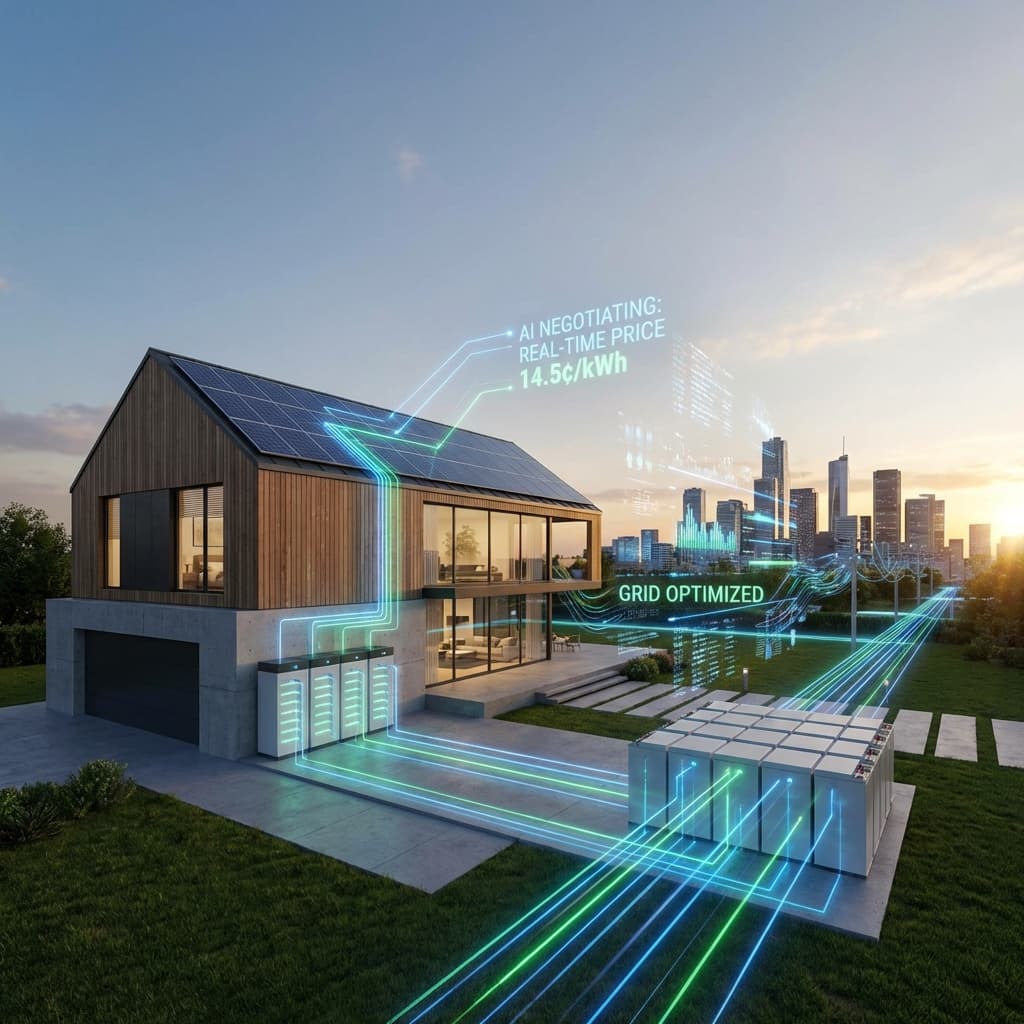
For the last decade, the “Smart Home” has been a lie. It wasn’t truly smart; it was just remote-controlled. You had to pull out your phone, open an app, and tap a button to turn on the lights. Or you had to shout repetitive commands at a speaker: “Hey Google, turn on the living room lights… no, the OTHER living room lights.”
In 2026, the era of the “Command Line” home is over. We are entering the age of Predictive Orchestration. Your home no longer waits for your orders; it anticipates your needs.
The Shift: From Reactive to Predictive
The fundamental change this year is the move from explicit triggers (you tapping a button) to implicit context (the house knowing what you want).
Leading systems like Josh.ai and Home Assistant now use local Large Language Models (LLMs) to process thousands of data points—time of day, local weather, your phone’s location, the humidity in the bedroom, and even the power draw of your EV charger—to make decisions on your behalf.
The “Morning Protocol” Example
- 2020 Smart Home: You set a static alarm for 7:00 AM. If you wake up early, the alarm still rings at 7:00 AM.
- 2026 AI Home: The system notices your Oura Ring detected you waking up at 6:45 AM. It silently disarms the security system, slowly fades up the kitchen lights (color-tuned to 4500K for alertness), and pre-heats the espresso machine. It cancels the 7:00 AM audible alarm because it knows you are already up.
This is Invisible Intelligence—tech that works so well you forget it’s there.
The Sensor Revolution: Presence vs. Motion
To make these decisions, the home needs better eyes. The old infrared motion sensors were dumb—they couldn’t tell the difference between a person reading a book and an empty room, leading to the dreaded “waving your arms to turn the lights back on” dance.
In 2026, we have moved to mmWave Radar sensors, like the Aqara FP2.
- True Presence Detection: Unlike motion sensors, mmWave detects the sub-millimeter movement of your chest breathing. It knows you are sitting on the couch reading, even if you haven’t moved an inch in 20 minutes.
- Zone Tracking: A single sensor can map a room into 30 distinct zones. It knows if you are at your desk (turn on task lights) vs. on the sofa (turn on TV mode) vs. walking through the hallway (turn on path lights).
- Fall Detection: For elderly residents, these sensors provide privacy-safe monitoring. They can detect a sudden fall without using invasive cameras, triggering an instant alert to caregivers [[14]].
The Glossy Glue: Matter 2.0
For years, the industry was fragmented. Apple devices didn’t talk to Amazon devices, and Samsung fridges ignored Google thermostats. The Matter protocol promised to fix this, and with the 2025 release of Matter 2.0, it finally has.
Matter 2.0 has introduced “Universal Casting” and “Energy Profiling.”
- Universal Interoperability: A $15 smart bulb from Amazon now works flawlessly with a high-end Savant automation system. You don’t need to check “Works with…” logos anymore. If it has the Matter logo, it works.
- The “Thread” Mesh: Thread radios are now standard in everything from Wi-Fi routers to smart plugs. This creates a self-healing mesh network where every device strengthens the signal for its neighbor. Dead zones are a thing of the past. If one light bulb fails, the signal automatically reroutes through another, creating bulletproof reliability [[3]][[4]].
Privacy First: The Rise of Local Agents
A major shift in 2026 is the rejection of cloud dependency. After several high-profile outages and privacy leaks in 2024-2025 (where security camera footage was inadvertently shared), consumers demanded control.
The Cloud Trap
When you use a cloud-based assistant, your voice recording travels to a server, is processed, and a command is sent back. This introduces:
- Latency: The 2-second “thinking” pause.
- Privacy Risk: In 2025, a massive data breach at a budget smart home vendor exposed 2.7 billion records, including Wi-Fi passwords and device logs. Users realized that “free” cloud services often come at the cost of their data being mined for behavioral advertising [[11]].
The “Local Brain” Solution
Devices like the Home Assistant Green and the new Josh.ai Core process everything locally.
- Zero Latency: Responses are instant.
- Air-Gapped Security: Your data never leaves your house. Even if the internet goes down, your smart home still works.
- Capabilities: Using quantized LLMs (like Llama-4-Lite), these local hubs can understand complex, compound commands like: “Check if the back door is locked, and if the garage is open, close it, but only if the car is inside.” [[5]][[6]].
Health & Wellness: The Circadian Home
The smart home is becoming a health device. The focus has shifted from “convenience” to “biology.”
Circadian Lighting
Our bodies are evolved to synchronize with the sun. Artificial blue light at night suppresses melatonin, ruining sleep quality.
- The Protocol: 2026 smart lighting systems automatically adjust “Color Temperature” throughout the day.
- 07:00 AM: Cool, bright white (6000K) to stimulate cortisol and wakefulness.
- 01:00 PM: Neutral white (4000K) for focus.
- 08:00 PM: Warm amber (2700K) to signal the body it’s time to wind down.
- 11:00 PM: Deep red (1800K) nightlights that allow navigation without breaking sleep cycles.
- The Evidence: A 2025 clinical review found that homes with automated circadian lighting reported a 15% improvement in sleep efficiency and reduced symptoms of Seasonal Affective Disorder (SAD) [[12]][[15]].
Energy Efficiency: The AI Payoff
The killer app for the 2026 smart home isn’t convenience; it’s cost savings. With energy prices rising, AI orchestration is paying for itself.
Predictive HVAC
AI thermostats now monitor local energy rates in real-time. If your utility provider charges more between 4:00 PM and 7:00 PM (Peak Pricing), the system will “supercool” your home to 68°F at 3:30 PM (when power is cheap) and then coast through the expensive window without drawing grid power.
- The Savings: Case studies show typical households saving 15-20% on HVAC costs annually [[7]][[12]].
The “Vampire” Slayer
Smart plugs with energy monitoring (now standard via Matter 2.0) detect “vampire loads”—devices that draw power even when off. The AI identifies that your gaming PC is drawing 50 watts in standby mode at 3:00 AM and kills the power at the plug, re-enabling it only when you wake up.
Predictive Maintenance: The Home That Heals Itself
Beyond energy and comfort, the 2026 smart home is a diagnostician. It listens to the “heartbeat” of your house to prevent catastrophic failures.
Acoustic & Vibration Analysis
New AI sensors attached to critical infrastructure like HVAC units and sump pumps establish a baseline of normal operation. When a compressor starts vibrating at a slightly irregular frequency—inaudible to human ears—the AI flags it.
- The Outcome: You get a notification: “The A/C capacitor serves a 15% probability of failure within 2 weeks. I have scheduled a technician for Tuesday at 10 AM. Approve?”
- Leak Defense: Devices like the Flume 2 and Moen Flo monitor water pressure 24/7. If they detect a “micro-leak” (e.g., a toilet flapper not sealing) or a catastrophic pipe burst, they automatically shut off the main water valve in 3 seconds, saving thousands in water damage claims [[16]].
The Luxury Tier: Josh.ai vs. Control4 vs. Savant
For those not interested in DIY, the professional market is fierce.
| Feature | Josh.ai | Control4 (Snap One) | Savant |
|---|---|---|---|
| Philosophy | “Voice-First & Privacy” | “The Reliable Standard” | “Visual Luxury & Power” |
| Best Feature | JoshGPT: A truly conversational assistant that understands context and nuance better than Siri/Alexa. | Interoperability: Works with literally everything. The “Swiss Army Knife” of automation. | Power & Energy: Best-in-class energy monitoring dashboard and solar integration. |
| Ideal User | Privacy-conscious users who want natural voice control without the “Robot Voice.” | Families who want physical remotes and rock-solid reliability for AV systems. | Eco-conscious luxury homeowners with solar/battery setups. |
| 2026 Update | Local “Core” processor is now 5x faster; integrated “Room Awareness” sensors. | New UI overhaul finally modernizes the interface; Matter native. | “Savant Power” modules now integrate with Tesla Powerwalls natively. |
The Human Element: Setting Boundaries
The danger of a “Predictive Home” is that it can become overbearing. A house that constantly adjusts lights and shades can feel haunted if the logic isn’t transparent.
- The “Guest Mode” Button: Every system now features a prominent “Guest Mode” that disables complex automations. This ensures your babysitter doesn’t get plunged into darkness because the “Movie Mode” AI decided it was cinema time.
- Orchestration, Not Domination: The best AI suggests, it doesn’t force. It might send a gentle notification: “It looks like you’re watching a movie. Want me to dim the lights?” rather than just doing it.
Conclusion: The Home that Cares
In 2026, the definition of luxury has changed. It’s not about gold faucets or marble floors. It’s about a home that knows you. A home that ensures the temperature is perfect before you even ask, that locks the doors when you forget, and that manages its own energy footprint so you don’t have to. The “Smart Home” is finally dead. Long live the Intelligent Home.
References
[1] Yale Home. “The Evolution of Smart Home Automation 2026.” yalehome.co.uk [2] NuWave. “Predictive Automation Trends.” nuwavega.com [3] CE Pro. “Matter 2.0: The End of Fragmentation.” cepro.com [4] Wikipedia. “Matter (Standard) Version History.” wikipedia.org [5] Home Assistant. “Year of the Voice: Chapter 5 - Local Control.” home-assistant.io [6] Josh.ai. “Privacy by Design: The Local Core Architecture.” josh.ai [7] Savant. “Savant Power: The Future of Energy Management.” savant.com [8] Control4. “OS 4: The Intelligent Update.” control4.com [9] The Verge. “Why 2026 is the Year of Support for Matter.” theverge.com [10] TechHive. “Best Smart Home Hubs of 2026.” techhive.com [11] IoT Breakthrough. “AI in Energy Management: 2026 Market Report.” iotbreakthrough.com [12] Energy Star. “Smart Thermostat Savings Report 2025.” energystar.gov [13] Reddit r/homeassistant. “Home Assistant Green Review 2026.” reddit.com [14] Aqara. “FP2 Sensor: The Future of Presence.” aqara.com [15] Journal of Sleep Research. “Circadian Lighting in Residential Settings.” 2025. onlinelibrary.wiley.com
Related Articles
The Death of 'Nothing to Wear': Inside the Rise of the Wardrobe AI
From smart mirrors that critique your outfit to algorithms that shop for you, we explore how AI is redefining personal style and ending fast fashion waste.

The Monk in the Machine: How AI is Decoding Nirvana
From AI-generated soundscapes that adapt to your heart rate to headbands that gamify zen, we explore the intersection of technology and ancient mindfulness.
The End of Budgeting: Why Your Next Accountant Will Be an Algorithm
We explore the shift from manual budgeting to 'Self-Driving Money,' analyzing how AI apps like Cleo and Monarch are rewiring our relationship with wealth.