Sundar Pichai Warns AI Will Rapidly Reshape Jobs, Calls for Urgent Global Reskilling
Google CEO says automation will affect every sector, urges governments and companies to act before disruption widens inequality.
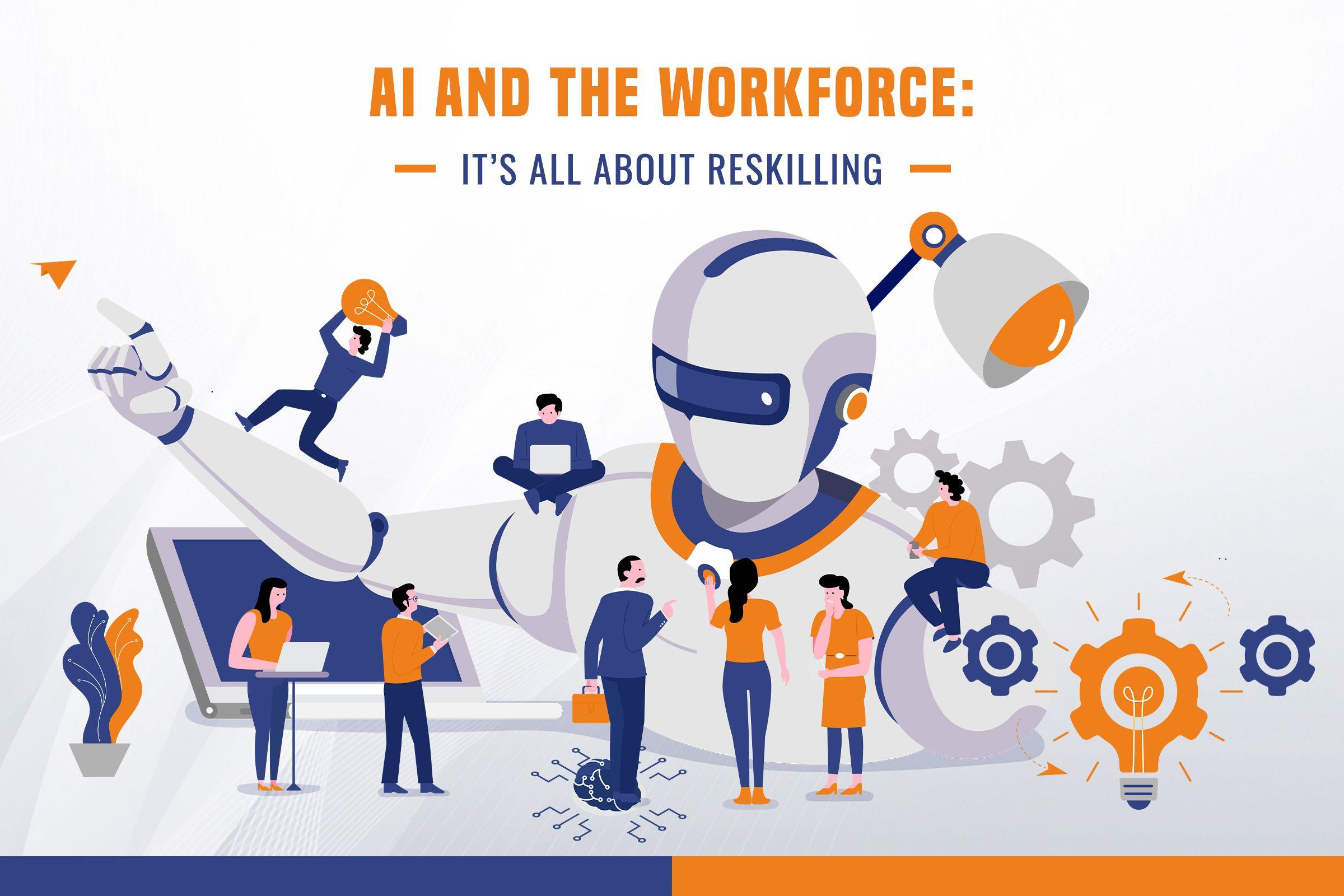
Summary: Google CEO Sundar Pichai issues urgent warning that AI will rapidly automate routine work across all sectors, fundamentally transforming employment. He calls for massive global reskilling initiatives to ensure AI benefits everyone, not just a privileged few, as no job—not even CEO roles—is immune from AI’s transformative reach.

Artificial intelligence will rapidly automate routine work and fundamentally alter the nature of employment across industries, Google and Alphabet CEO Sundar Pichai warned in a recent BBC interview, calling for urgent and large-scale reskilling efforts worldwide.
Speaking on the accelerating pace of AI development, Pichai said no job sector is immune from transformation, as AI systems increasingly take on tasks once performed exclusively by humans.
“The nature of work will fundamentally change,” Pichai said, acknowledging both the opportunity and disruption that AI will bring.
Automation at Unprecedented Speed
Pichai identified the automation of routine and repetitive tasks as the most immediate impact of AI adoption. While advanced roles will continue to evolve, jobs heavily dependent on predictable workflows face the highest risk of displacement.
He added that AI is moving beyond simple assistance tools and toward autonomous systems capable of executing complex tasks, a shift that could redefine productivity benchmarks across industries.
In a striking observation, Pichai suggested that even leadership roles — including that of a CEO — may one day be influenced by AI, underscoring the technology’s reach.
Opportunity Depends on Preparation
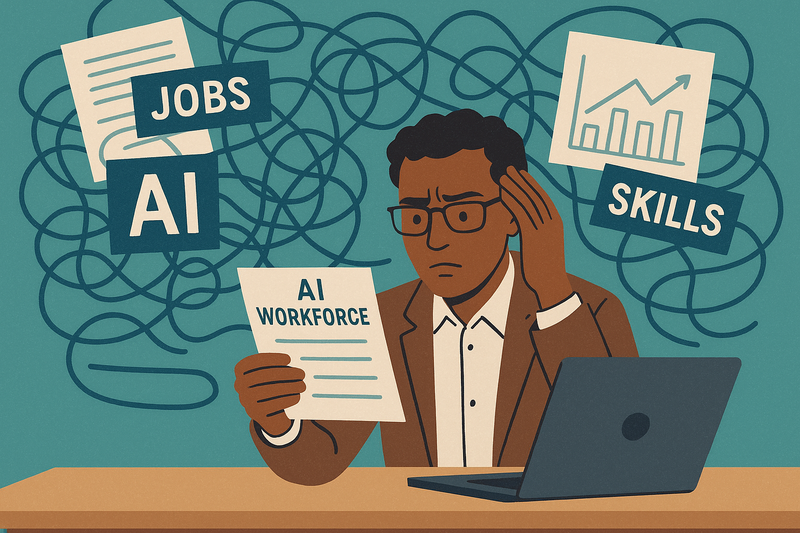
Despite the warning, Pichai rejected the notion that AI is purely a job destroyer. Drawing parallels with previous technological revolutions, he argued that AI can create new categories of high-skilled employment, provided societies prepare their workforces in time.
However, he cautioned that without intervention, AI could deepen inequality.
“We need massive reskilling efforts to ensure that this technology benefits everyone, not just a few.”
Pichai emphasized that responsibility must be shared among governments, educational institutions, and private enterprises, with education systems adapting to focus on critical thinking, creativity, and AI-complementary skills.
The Framework for AI-Enabled Work
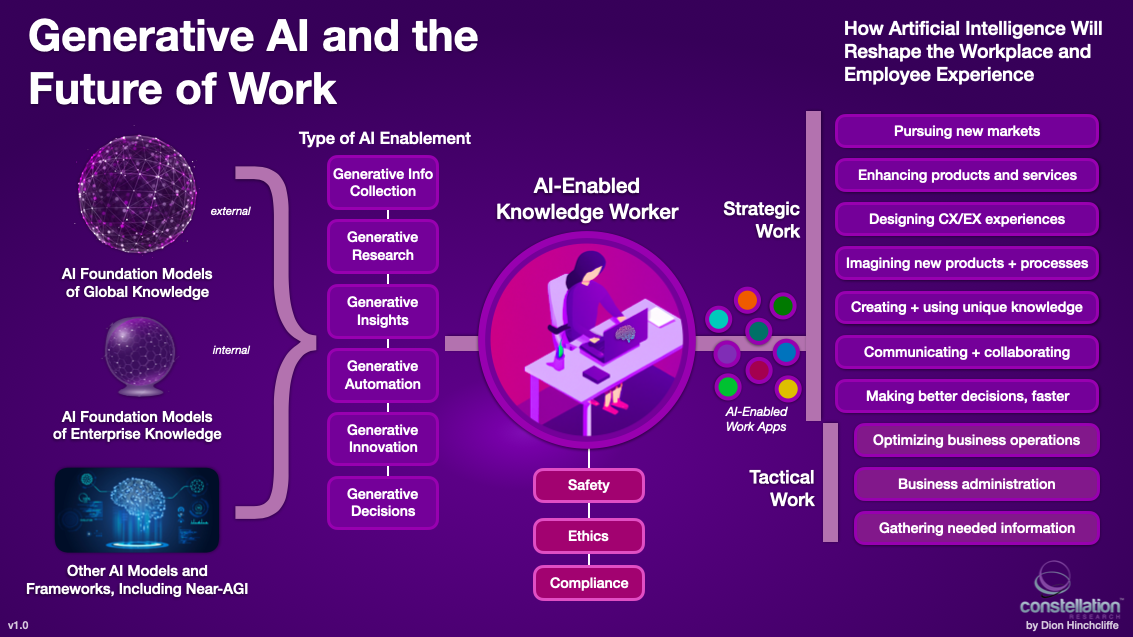
The transformation Pichai describes aligns with emerging frameworks for understanding AI’s workplace impact. From generative information collection to automation and innovation, AI is creating new categories of “knowledge worker” roles while simultaneously disrupting traditional employment patterns.
Strategic work now requires:
- Pursuing new markets through AI insights
- Enhancing products and services with generative capabilities
- Designing better customer experiences
- Creating and using unique knowledge
- Making faster, more informed decisions
- Optimizing business operations in real-time
Meanwhile, tactical work like business administration and information gathering becomes increasingly automated, requiring workers to adapt or transition to higher-value activities.
A Measured View from Zoho
Offering a contrasting approach, Zoho founder and Chief Scientist Sridhar Vembu has advocated for a more cautious integration of AI, particularly in software development.
While Zoho actively uses AI coding tools, Vembu has said the company does not mandate their use. Engineers remain accountable for reviewing and approving all AI-generated code, a policy aimed at reducing security risks and technical debt.
“The final responsibility of the end product rests with the human engineer,” Vembu said.
This human-first strategy highlights an emerging consensus: AI should augment human judgment, not replace it outright.
Skills Demand for the Digital Economy
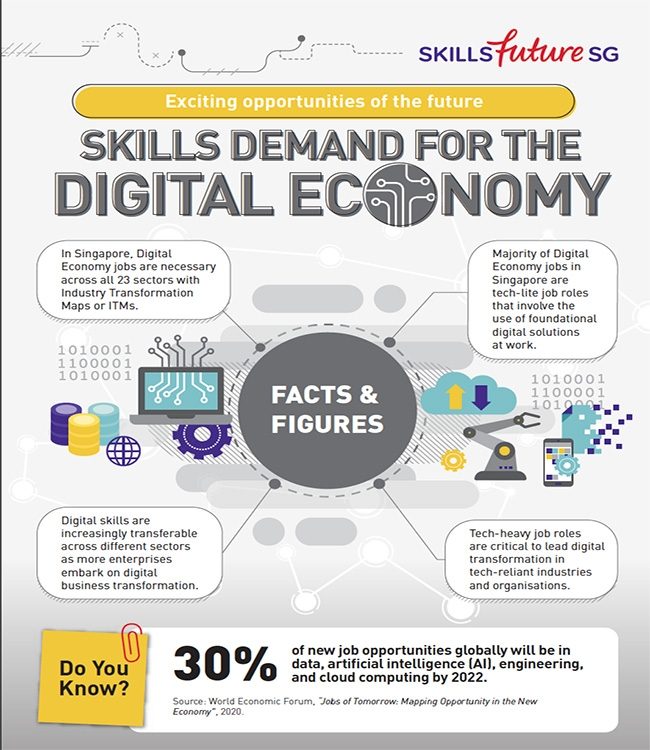
The urgency of Pichai’s message is underscored by workforce data showing that digital economy jobs increasingly require tech-lite capabilities and foundational digital skills. According to industry research:
- 30% of new job opportunities globally will be in data, artificial intelligence, engineering, and cloud computing by 2022
- Digital skills are increasingly transferable across different sectors as more enterprises embark on digital transformation
- Tech-heavy job roles are critical to lead digital transformation in tech-reliant industries and organizations
- In markets like Singapore, digital economy jobs span all 23 sectors with industry transformation maps or ITMs
A Global Call to Act
Pichai’s warning reflects a growing concern among technology leaders that society is underprepared for AI’s speed of disruption. Without coordinated policy, education reform, and corporate investment, the gap between AI beneficiaries and displaced workers could widen significantly.
The challenge is multifaceted:
For Governments
- Implement proactive reskilling programs at national scale
- Reform education systems to prioritize AI-complementary skills
- Create safety nets for displaced workers during transitions
- Develop policies that encourage responsible AI adoption
For Companies
- Invest in employee retraining and upskilling programs
- Adopt human-first AI implementation strategies
- Maintain accountability frameworks for AI-generated work
- Balance automation with workforce development
For Educational Institutions
- Redesign curricula to emphasize critical thinking and creativity
- Integrate AI literacy across all disciplines
- Partner with industry for real-world skill development
- Focus on lifelong learning models
As AI adoption accelerates, the challenge is no longer whether jobs will change — but whether institutions can adapt quickly enough to protect livelihoods while enabling innovation.
The Path Forward
The conversation around AI and employment is shifting from speculation to action. Leaders like Pichai are no longer asking if AI will transform work, but rather how quickly we can prepare the global workforce for this inevitable transition.
Success will require unprecedented collaboration between technology companies, governments, educational systems, and workers themselves. Those who act now to build AI-complementary skills, critical thinking capabilities, and creative problem-solving expertise will be best positioned to thrive in the AI-enabled economy.
The alternative—inaction or delayed response—risks creating a bifurcated society where AI’s benefits accrue to a small elite while millions face economic displacement.
The choice, as Pichai’s warning makes clear, is ours to make. But the window for preparation is narrowing fast.
What steps is your organization taking to prepare for AI-driven workplace transformation? Share your thoughts in the comments below.
Related Articles

Agentic AI Systems: From Chatbots to Operating Loops in the Enterprise
Agentic systems turn language models into goal-seeking workflows that plan, act, verify, and learn—shifting AI from “answers” to “outcomes.”
The Age of Infrastructure: How AI Went from Innovation to Utility in 18 Months
Artificial intelligence has transitioned from future technology to infrastructure. This guide outlines the seven trends reshaping the landscape, from multimodal AI to the agentic revolution.

The AI Arms Race: Cybersecurity in the Age of Autonomous Agents
When phishers use voice clones and malware writes itself, traditional firewalls are useless. We explore the 2026 threat landscape: hyper-personalized social engineering, automated penetration testing, and the Zero Trust AI response.