Generative AI in Supply Chain: From Prediction to Autonomous Orchestration
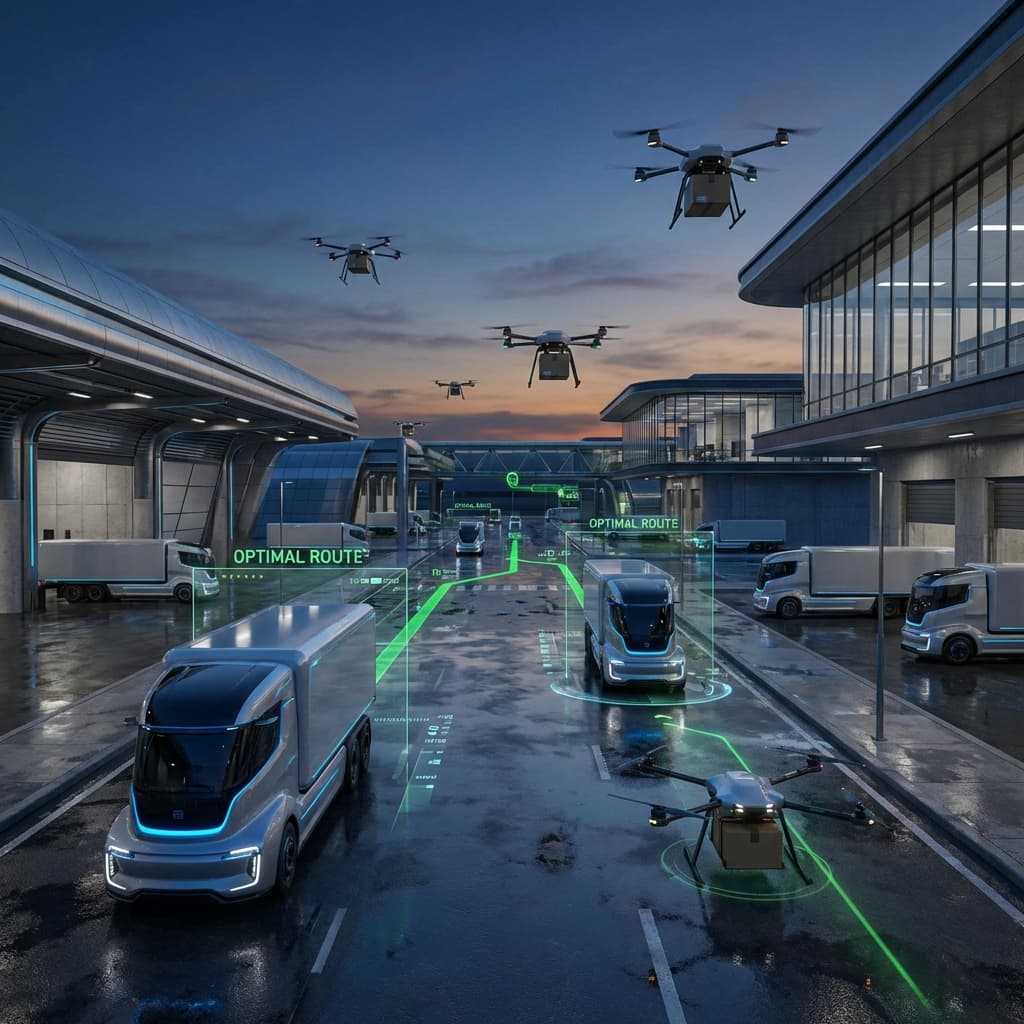
Generative AI shifts supply chain from "predictive" to "autonomous orchestration"—automatically creating solutions and negotiating rates without human intervention.
Generative AI in Supply Chain: From Prediction to Autonomous Orchestration
Executive Summary
For the past decade, supply chain technology has been “predictive”—telling you that a shipment will be late. Generative AI is shifting this paradigm to “autonomous orchestration”—not just predicting the delay, but automatically generating a solution, negotiating the new rate with a carrier, and re-routing the inventory without human intervention. This move toward the “Self-Healing Supply Chain” is unlocking massive efficiency, with early adopters like Maersk and Unilever seeing 20-30% operational gains. This article explores how Generative AI is transforming logistics from a cost center into a strategic competitive advantage.
Market Context & Drivers
The supply chain is no longer linear; it is a complex, fragile web. The “Just-in-Time” model broke during the pandemic, and the “Just-in-Case” model is too expensive. The new model is “Just-in-Intelligence.”
Market Size: The global “Generative AI in Supply Chain” market is projected to reach $1.36 billion by 2026 [1], growing at a massive 45% CAGR. Key Drivers:
- Labor Shortages: The logistics sector faces a chronic shortage of skilled planners and drivers.
- Volatility: Geopolitical events and climate change require instant adaptability, not weekly planning cycles.
- Unstructured Data: 80% of supply chain data (emails, contracts, bills of lading) is unstructured text that legacy systems cannot read, but GenAI can.
Technology Overview: Business Perspective
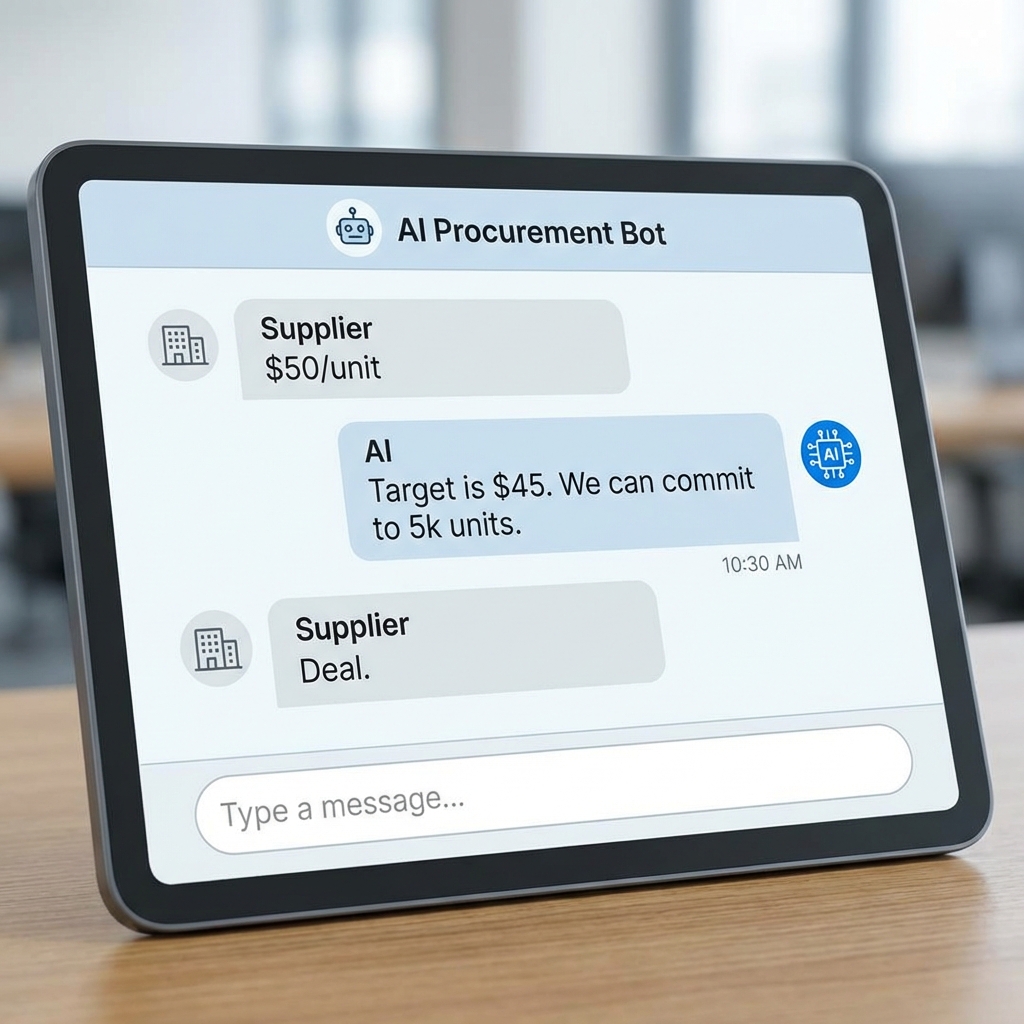
Generative AI in logistics is not about “chatbots”; it is about “Agents.” These are systems that can reason, plan, and execute.
Leading Solutions:
- Blue Yonder: Their “Luminate Cognitive Platform” now uses generative agents to spot inventory gaps and automatically “heal” them by reallocating stock between warehouses [2].
- Project44: The leader in visibility is rapidly adding “Movement GPT,” allowing logistics managers to ask, “Where is my shipment?” in plain English and receive a detailed, predictive answer [3].
- Microsoft Supply Chain Center: Integrates Copilot to actively monitor news feeds for disruptions (e.g., strikes at a port) and immediately suggest alternative supplier routes.
Business Model Impact & Use Cases
The strategic value lies in removing the “human latency” between a disruptive event and the corrective action.
1. Autonomous Negotiation & Procurement
Instead of a human buyer emailing three suppliers to clear a bottleneck, a GenAI agent can simultaneously negotiate with 50 suppliers in 10 languages, executing the contract with the one who offers the best balance of speed and price. Maersk is using similar tech to streamline customs brokerage [4].
2. The “Self-Healing” Network
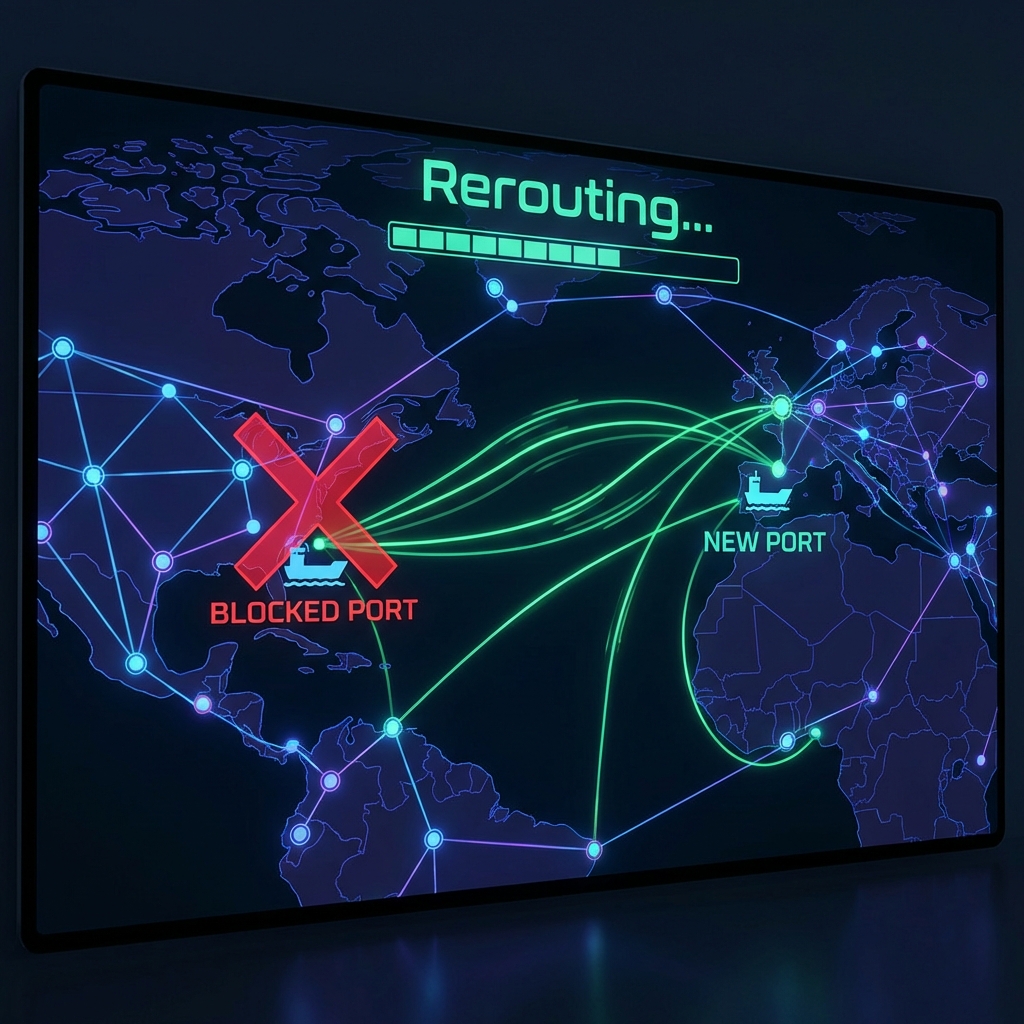
If a storm closes the port of Rotterdam, Blue Yonder’s agents can instantly re-route ships to Antwerp and adjust the truck pick-up schedules, all within seconds. This “decision intelligence” reduces the “Bullwhip Effect” where delays amplify down the chain [2].
3. Generative Scenario Planning
Traditional planning takes weeks. GenAI can generate 1,000 “What-If” scenarios in minutes. “What if Taiwan closes?” “What if oil hits $150?” Unilever uses this agility to adjust production of freezers and ice cream based on weather forecasts, driving 30% sales uplifts [5].
Use Case Comparison:
| Use Case | Business Benefit | Complexity | ROI Timeline | Best For |
|---|---|---|---|---|
| Document Automation | 80% reduction in manual data entry | Low | 3-6 months | Customs/Freight Forwarding |
| Generative Procurement | 5-10% cost reduction via better negotiation | Medium | 6-12 months | Manufacturing |
| Autonomous Re-routing | 90% faster response to disruption | High | 12-24 months | Global Logistics |

Case Study: Maersk - The Zero-Touch Vision
Context: Maersk, the shipping giant, wanted to move beyond just “moving boxes” to being an integrated logistics partner. Implementation: They deployed AI models to predict port congestion and potential routing delays. More importantly, they integrated “Customs AI” to automatically generate and validate the thousands of documents required for cross-border trade. Results:
- $300 Million Savings: Annual operational savings driven by predictive maintenance and routing efficiency [4].
- 20% Efficiency Gain: In operations through better asset utilization.
- Action: The system enables “Zero-Touch” logistics for standard shipments, where no human touch is needed from booking to delivery [4].
Implementation Framework
Decision Criteria:
- Adopt Now If: Your supply chain is global, complex, and involves thousands of documents/emails daily.
- Wait If: You operate a local, simple supply chain where human relationships (calling the driver) are more efficient than digital orchestration.
Typical Implementation Timeline:
- Phase 1 (Months 1-3): The “Data Lakehouse.” You cannot use GenAI if your ERP data is siloed. Consolidate inventory and shipment data.
- Phase 2 (Months 4-6): The “Co-Pilot.” Give planners a tool like Project44’s Movement GPT to help them find answers faster.
- Phase 3 (Months 7-12): The “Agent.” Allow the AI to execute small, low-risk decisions (e.g., re-ordering low-cost consumables) without approval.
Resource Requirements:
- Budget: $200k+ for enterprise connectivity (API integrations are the main cost).
- Talent: “Supply Chain Architects” who understand both logistics physics and data structures.
ROI Analysis & Economics
Cost Structure:
- Inventory Costs: AI can reduce safety stock by 20-30% by improving confidence in delivery times.
- Freight Costs: Optimizing container loads and routes can save 10-15% on freight spend.
Expected Returns:
- Net Working Capital: Freeing up cash trapped in excess inventory is the biggest financial win.
- Service Levels: Improving On-Time-In-Full (OTIF) delivery metrics by 10-20% directly protects revenue.
Risks, Challenges & Mitigation
The Hallucination Trap:
- Risk: A GenAI model trying to “optimize” a route might “hallucinate” a bridge where none exists, or invent a supplier who went bankrupt years ago [6].
- Mitigation: Grounded Generation. The AI must be strictly bound to a “Knowledge Graph” of verified physical reality (maps, active vendor lists). It cannot be allowed to “invent.”
The “Black Box” of Liability:
- Risk: If an AI negotiates a bad contract, who is liable?
- Mitigation: Human-in-the-loop sign-off for any contract >$50k.
Strategic Recommendations & Outlook
2026-2028 Market Evolution: Supply chains will move from “Chain” to “Grid.” Generative AI will allow companies to dynamically form “pop-up supply chains”—instantly vetting and connecting with new suppliers in a crisis region for just 3 months, then dissolving the partnership when no longer needed.
Competitive Implications:
- Resiliency as a Product: Logistics providers who sell “guaranteed up-time” (powered by AI redundancy) will command a premium over those selling just “freight.”
- The Data Divide: Companies that digitized their contracts 5 years ago are ready for GenAI. Those pushing paper are 5 years behind.
Actionable Next Steps:
- For COOs: Stop asking “What happened?” Start asking “relationships.” Map your suppliers.
- For Logistics Leaders: Pilot a “Chat with your Data” tool (like Project44) to reduce the time your team spends searching for containers.
- For Procurement: Test “Generative Negotiation” on your tail-spend (low value items). Let the bot haggle for office supplies.
References
[1] Precedence Research. “Generative AI in Supply Chain Market.” 2024. [2] Blue Yonder. “ICON 2025: The Launch of Supply Chain Agents.” 2025. [3] Project44. “Movement GPT and the Intelligent TMS.” 2025. [4] Exim Agent. “Maersk AI Case Study: $300M in Savings.” 2024. [5] Unilever. “AI in Supply Chain: Smart Freezers and Resilience.” 2024. [6] Logistics Viewpoints. “Risks of AI Hallucinations in Supply Chain.” 2024.
Related Articles

Autonomous Customer Service: Economics of AI Agents Replacing Tier-1 Support Teams
AI agents operate at $0.50 per interaction vs $6.00 for humans. This article explores the deflection economy, 24/7 global coverage, and the need for a hybrid empathy strategy.

Hyper-Personalized Marketing at Scale: The Era of the "Segment of One"
Generative AI enables the "Segment of One": creating unique, individualized brand experiences for millions of customers simultaneously.

Multi-Agent Orchestration Patterns: Architecting the "Swarm" Enterprise
Architecture guide for coordinating autonomous agent swarms. We cover the Master-Agent delegation pattern, the Model Context Protocol (MCP), and how to debug non-deterministic distributed systems.