Hyper-Personalized Marketing at Scale: The Era of the "Segment of One"
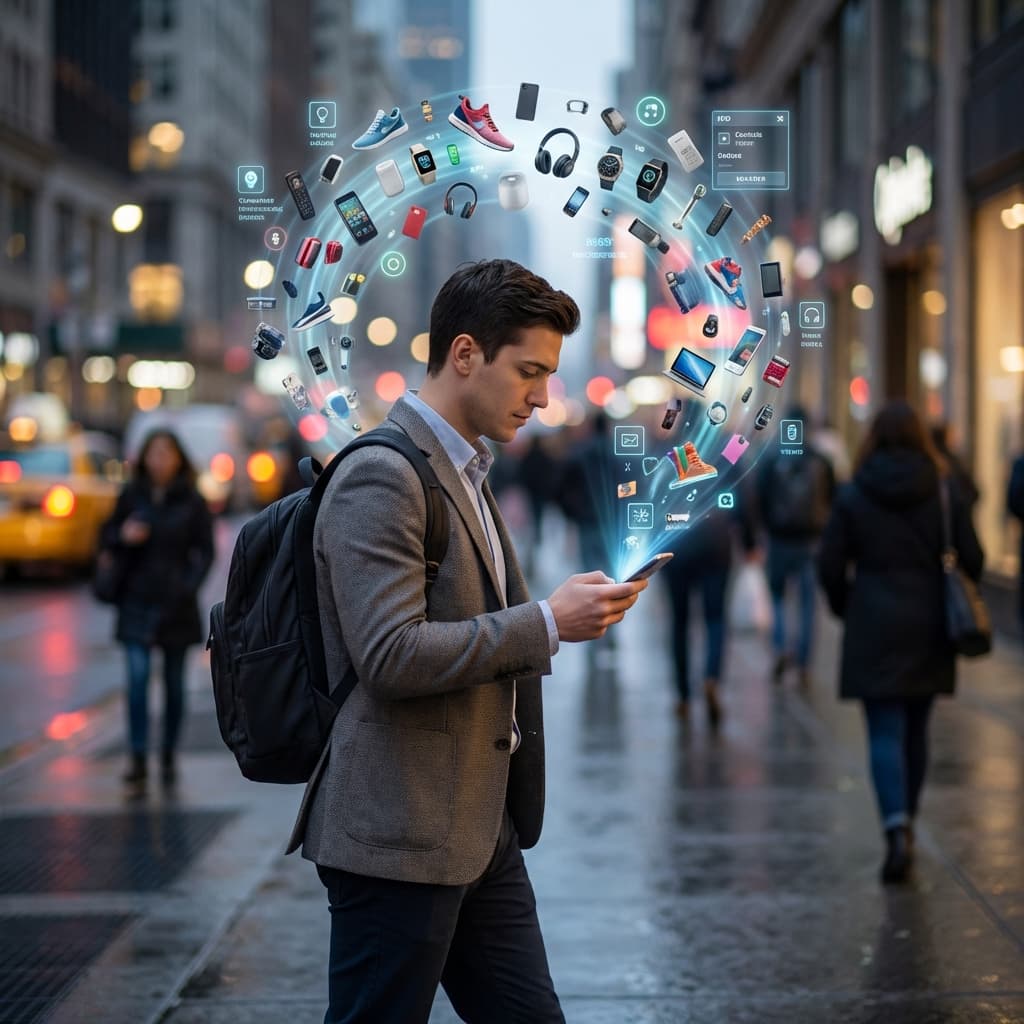
Generative AI enables the "Segment of One": creating unique, individualized brand experiences for millions of customers simultaneously.
Hyper-Personalized Marketing at Scale: The Era of the “Segment of One”
Executive Summary
Marketing segmentation—dividing customers into broad buckets like “Millennials” or “High Earners”—is an artifact of the pre-AI era. Today, Generative AI enables the “Segment of One”: creating unique, individualized brand experiences for millions of customers simultaneously. By combining real-time behavioral data with generative creative engines, brands can now tailor not just the product recommendation but the image, copy, and tone of the message to a specific individual’s psychological profile. This shift is delivering 30-40% efficiency gains and massive revenue uplift for early movers like Starbucks and JPMorgan Chase, but it walks a razor-thin line between “helpful” and “creepy.”
Market Context & Drivers

The days of generic “spray and pray” email blasts are over. The convergence of Customer Data Platforms (CDPs) and Generative AI has created a new category: “Generative Experience Platforms.”
Market Size: The global “AI in Marketing” market is projected to reach $32.73 billion by 2026 [1], with the specific hyper-personalization niche growing to $67.9 billion by 2031 [2]. Key Drivers:
- Ad Fatigue: Consumers see 10,000 ads a day; generic content is invisible.
- Cookie Deprecation: With third-party cookies vanishing, brands must rely on first-party data and AI to predict intent.
- Generative Scale: Humans cannot write 1 million unique subject lines. AI can.
Technology Overview: Business Perspective
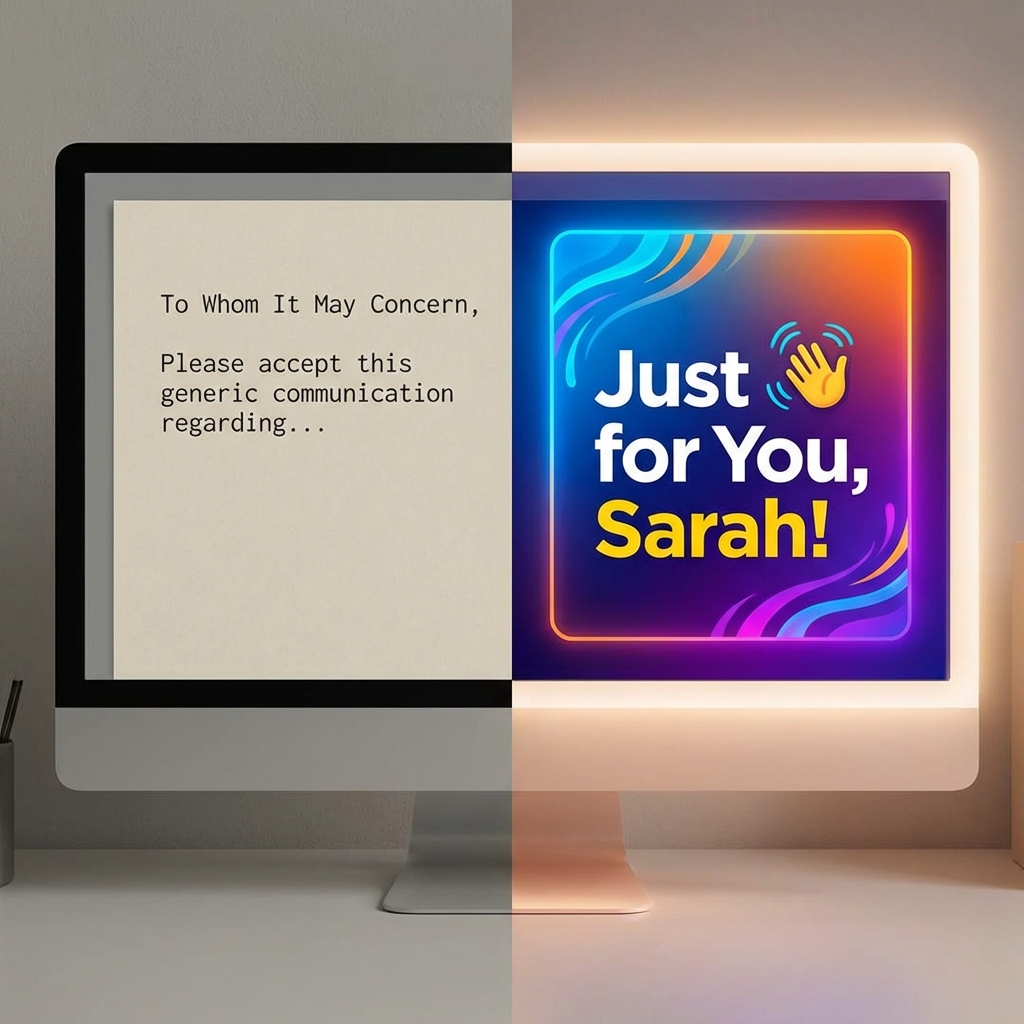
Hyper-personalization requires a new tech stack that closes the loop between Data, Creation, and Delivery in milliseconds.
Leading Solutions:
- Adobe Firefly: The enterprise standard for “Brand Safe” generative imagery. It allows global teams to generate infinite variations of campaign assets (e.g., swapping a beach background for a mountain background based on user location) without copyright risk.
- Persado: Uses “Motivation AI” to generate the exact words that trigger action. It doesn’t just write copy; it analyzes whether a customer responds better to “Urgency” (Act Now!) or “Exclusivity” (Just for You).
- Typeface: Built specifically for the enterprise, it trains on your brand’s unique voice and assets to generate on-brand blogs, social posts, and emails 10x faster than human teams [3].
Business Model Impact & Use Cases
The strategic shift is from “Campaign-Centric” (launching a product) to “Customer-Centric” (reacting to a moment).
1. The “Segment of One” Creative

Instead of A/B testing two images, AI tests 10,000. If a customer loves dog content, the banner ad shows a dog. If they prefer minimalism, it shows a clean typographic layout. Adobe Firefly enables this at a scale human designers cannot match.
2. Algorithmic Copywriting
Persado case studies show that changing a single word based on AI psychological profiling can lift conversion by 40% [4]. Financial institutions use this to tailor loan offers: one customer sees a message about “Safety,” another sees “Growth.”
3. Real-Time Loyalty (The Starbucks Model)
Starbucks Deep Brew is the gold standard. It doesn’t just suggest “Coffee”; it suggests “Draft Nitro Cold Brew” to a specific user on a hot Tuesday afternoon because it knows they buy cold drinks when it’s over 80°F. This AI engine drove $410 million in incremental revenue [5].
Use Case Comparison:
| Use Case | Business Benefit | Complexity | ROI Timeline | Best For |
|---|---|---|---|---|
| Generative Copy | 40% lift in engagement (CTR) | Low | 3 months | Email/Push |
| Dynamic Imagery | 20-30% lower CPA (Cost Per Acquisition) | High | 6-12 months | Display/Social |
| Predictive Loyalty | 15% increase in LTV (Lifetime Value) | Very High | 12-18 months | Retail/QSR |
Case Study: JPMorgan Chase - 450% ROI on Language
Context: Chase needed effective marketing copy for its diverse financial products (mortgages, credit cards) without ballooning its agency spend. Implementation: They deployed Persado’s AI to generate marketing copy. The AI ran thousands of multivariate tests to find the perfect emotional hook for each micro-segment. Results:
- 450% Lift in CTR: On some campaigns compared to human-written controls [4].
- Subjectivity Removed: Decisions on copy were no longer based on what a Creative Director “liked,” but on what the data proved worked.
- Efficiency: Reduced copywriting time/cost effectively to zero for routine transactional messages.
Implementation Framework
Decision Criteria:
- Adopt Now If: You have >1 million customers and rich first-party data (purchase history, app usage).
- Wait If: You are B2B with low volume/high value deals (Account Based Marketing needs human touch, not mass generation).
Typical Implementation Timeline:
- Phase 1 (Months 1-3): Data Unification. You cannot personalize if your email data doesn’t talk to your web data. Implement a CDP.
- Phase 2 (Months 4-6): The “Copy” Pilot. Start with text. Use Jasper or Persado to optimize email subject lines.
- Phase 3 (Months 7-12): Generative Visuals. Train a model like Typeface on your brand assets to start automating image creation.
Resource Requirements:
- Budget: $100k-$500k for the full stack (CDP + GenAI Platform).
- Talent: “Marketing Data Scientists” and “Prompt Engineers” replace traditional Copywriters.
ROI Analysis & Economics
Cost Structure:
- Traditional Creative: Expensive agencies, slow turnaround (weeks).
- Generative Creative: Flat license fee, instant generation. Cost per asset drops by 90% [6].
Expected Returns:
- Conversion Rate: 30% lift is the benchmark for successful personalization [5].
- Efficiency: Marketing teams can output 10x the content with the same headcount.
- Revenue: 10-20% attributable revenue growth from AI-driven campaigns [6].
Risks, Challenges & Mitigation
The Privacy Paradox (The “Creepy” Factor):
- Risk: Customers want relevance but fear surveillance. Sending a “Happy Birthday” coupon is nice; utilizing their private health data for an ad is an invasion.
- Mitigation: Permission Marketing. Always ask consent. Use “Zero-Party Data” (data the user explicitly gives you) rather than inferred surveillance data [7].
Brand Fragmentation:
- Risk: If AI generates 1 million unique messages, how do you ensure they all sound like your brand?
- Mitigation: Strict “Brand Governance” layers in tools like Typeface that prevent off-brand colors or tones from being published [3].
Algorithmic Bias:
- Risk: AI accidentally offering high-interest loans only to specific demographics.
- Mitigation: Human-in-the-loop auditing for all regulated industries (Finance/Healthcare).
Strategic Recommendations & Outlook
2026-2028 Market Evolution: Simple “text personalization” (Hi {Name}) will be table stakes. The winner will be “Generative Video”—creating unique 15-second video ads for every user on the fly.
Competitive Implications:
- The Content Moat: Brands with the best proprietary data to train their models will win. If everyone uses generic GPT-4, everyone sounds the same.
- Agency Disruption: Traditional ad agencies that charge for “hours” of copywriting will be decimated. Agencies must pivot to “Strategy” and “Model Tuning.”
Actionable Next Steps:
- For CMOs: Audit your content supply chain. If it takes >1 week to create an email banner, you are too slow.
- For Data Leaders: Calculate your “Addressable Audience.” How many of your users can you actually personalize for? (Do you have their ID?).
- For Legal: Establish a “Generative AI Policy” now regarding copyright and bias before the marketing team runs wild.
References
[1] Precedence Research. “AI in Marketing Market Size.” 2024. [2] Business Research Insights. “Hyper-Personalization Market Growth.” 2024. [3] Typeface. “Enterprise Generative AI for Brand Storytelling.” 2025. [4] Persado. “The Motivation AI Report: ROI in Financial Services.” 2025. [5] Digital Defynd. “Starbucks Deep Brew Case Study.” 2024. [6] McKinsey & Company. “The Economic Potential of Generative AI in Marketing.” 2024. [7] Forbes. “Navigating the Privacy vs. Personalization Paradox.” 2025.
Related Articles

Generative AI in Supply Chain: From Prediction to Autonomous Orchestration
Generative AI shifts supply chain from "predictive" to "autonomous orchestration"—automatically creating solutions and negotiating rates without human intervention.

Multi-Agent Orchestration Patterns: Architecting the "Swarm" Enterprise
Architecture guide for coordinating autonomous agent swarms. We cover the Master-Agent delegation pattern, the Model Context Protocol (MCP), and how to debug non-deterministic distributed systems.

Edge AI Deployment Strategies 2026: Bringing Frontier Models to Issues
A technical guide to deploying LLMs on smartphones and IoT devices. We cover model distillation, 4-bit quantization, and the Apple Neural Engine vs Snapdragon NPU landscape.