Orchestrating the Swarm: Design Patterns for Multi-Agent AI Systems
How do you stop a dozen autonomous AI agents from arguing in a loop? We detail the emerging software design patterns—Hierarchical, Sequential, and Joint Debate—that bring order to agentic chaos.
Building a single AI agent is easy. Building a Multi-Agent System (MAS) that doesn’t spiral into chaos is one of the hardest software engineering challenges of 2026.
When you connect a “Coding Agent,” a “Testing Agent,” and a “Product Manager Agent” in a loop, they often get stuck. The PM asks for a feature, the Coder writes it, the Tester finds a bug, the Coder fixes it but breaks the feature, the PM rejects it… and they burn $100 in API credits in 5 minutes accomplishing nothing.
To solve this, we are seeing the emergence of Agentic Design Patterns—standardized architectures for control flow.
1. The Handoff (Sequential Chain)
Pattern: Agent A -> Agent B -> Agent C. Use Case: A news aggregation pipeline.
- Researcher Agent: Scrapes the web for news.
- Writer Agent: Summarizes the scrapes into an article.
- Editor Agent: Fixes grammar and formatting. Pro: Easy to debug. Deterministic. Con: Brittle. If step 1 fails, the whole chain dies.
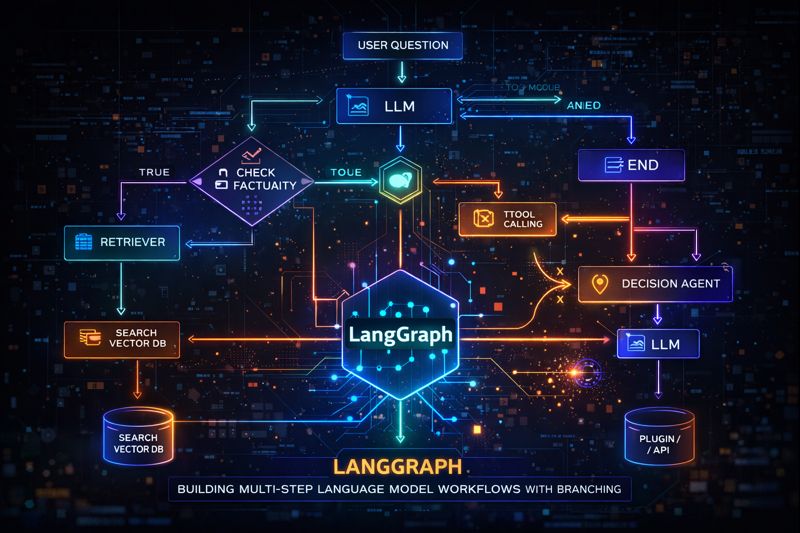
2. The Hierarchy (Master-Worker / Supervisor)
Pattern: A “Boss” agent breaks down a task and assigns it to “Worker” agents, then reviews their work. Use Case: Building a complex software feature.
- Supervisor: “We need a login page.” Breaks it into: backend API, frontend React form, SQL schema.
- Backend Agent: Writes the API.
- Frontend Agent: Writes the UI.
- Supervisor: Receives both. Checks if they match. “Frontend Agent, you used the wrong variable name from the API. Fix it.” Key Tech: LangGraph allows defining these state machines where the Supervisor is the router.
3. The Joint Council (Debate)
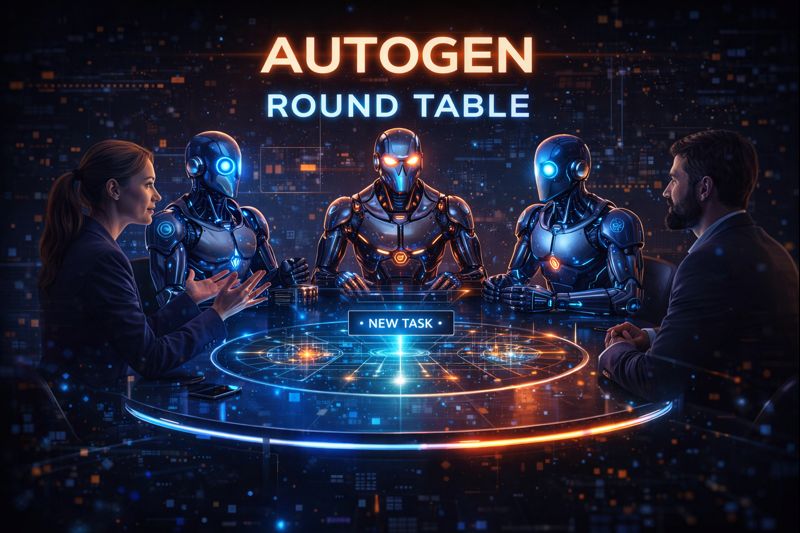
Pattern: Multiple agents with different “personas” critique each other until consensus. Use Case: Strategic decision making.
- Risk Agent: “This investment is too risky.”
- Growth Agent: “But the ROI potential is huge.”
- CEO Agent: Listens to the debate and makes the final call. Research shows that multi-agent debate (MAD) reduces hallucinations significantly because agents “fact check” each other.
4. Shared State (Blackboard System)
Pattern: Agents don’t talk to each other directly; they read/write to a shared document (State). Use Case: Writing a novel.
- The Character Agent updates the character bio.
- The Plot Agent reads the bio and updates the chapter outline.
- The Writer Agent reads the outline and writes the text. This decoupling prevents message-passing bottlenecks.
Implementing Control
The “Wild West” of agents is ending. Frameworks like Microsoft AutoGen and LangGraph are enforcing these structures using:
- State Machines: Defining valid transitions (Coder can only talk to Tester, not PM).
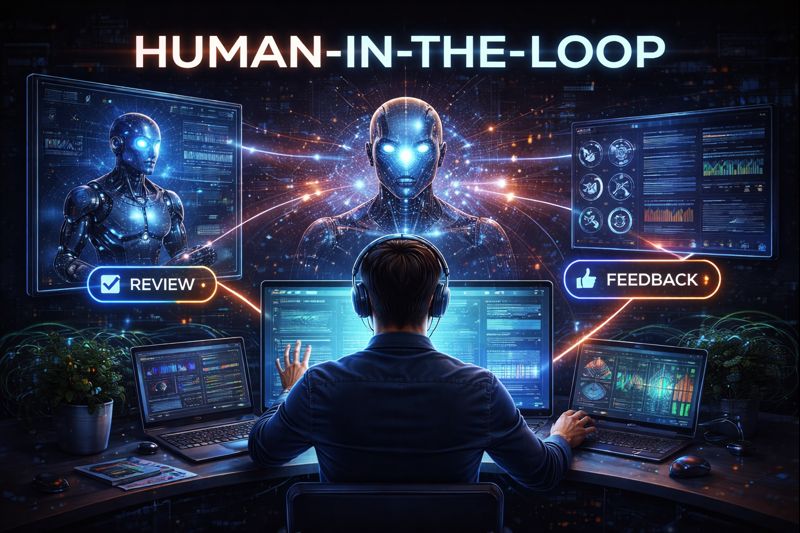
- Human-in-the-Loop Interrupts: The system pauses before key actions (Deploy) for human sign-off.
- Budgeting: Hard caps on “turns.” (If you haven’t fixed the bug in 5 tries, stop and ask for help).
We are moving from “Prompt Engineering” (talking to one model) to “Flow Engineering” (designing the conversation between many).
Related Articles
How Agentic AI Systems Are Transforming Enterprise Operations in 2026
Enterprise spending on autonomous AI systems has surged to $3.81 billion in 2025, projected to reach $71.91 billion by 2033. This analysis examines technical foundations, production implementations from Danfoss and JPMorgan, and architectural patterns for successful deployment.

The AI Arms Race: Cybersecurity in the Age of Autonomous Agents
When phishers use voice clones and malware writes itself, traditional firewalls are useless. We explore the 2026 threat landscape: hyper-personalized social engineering, automated penetration testing, and the Zero Trust AI response.
DeepSeek R1 and the Rise of Reasoning Models: System 2 AI Goes Open Source
The release of DeepSeek R1 has democratized 'System 2' reasoning capabilities previously locked behind closed APIs. We analyze how test-time compute and chain-of-thought distillation are redefining open-source AI performance.